
This post contains Amazon affiliate links. If you buy through them, we may earn a small commission at no extra cost to you.
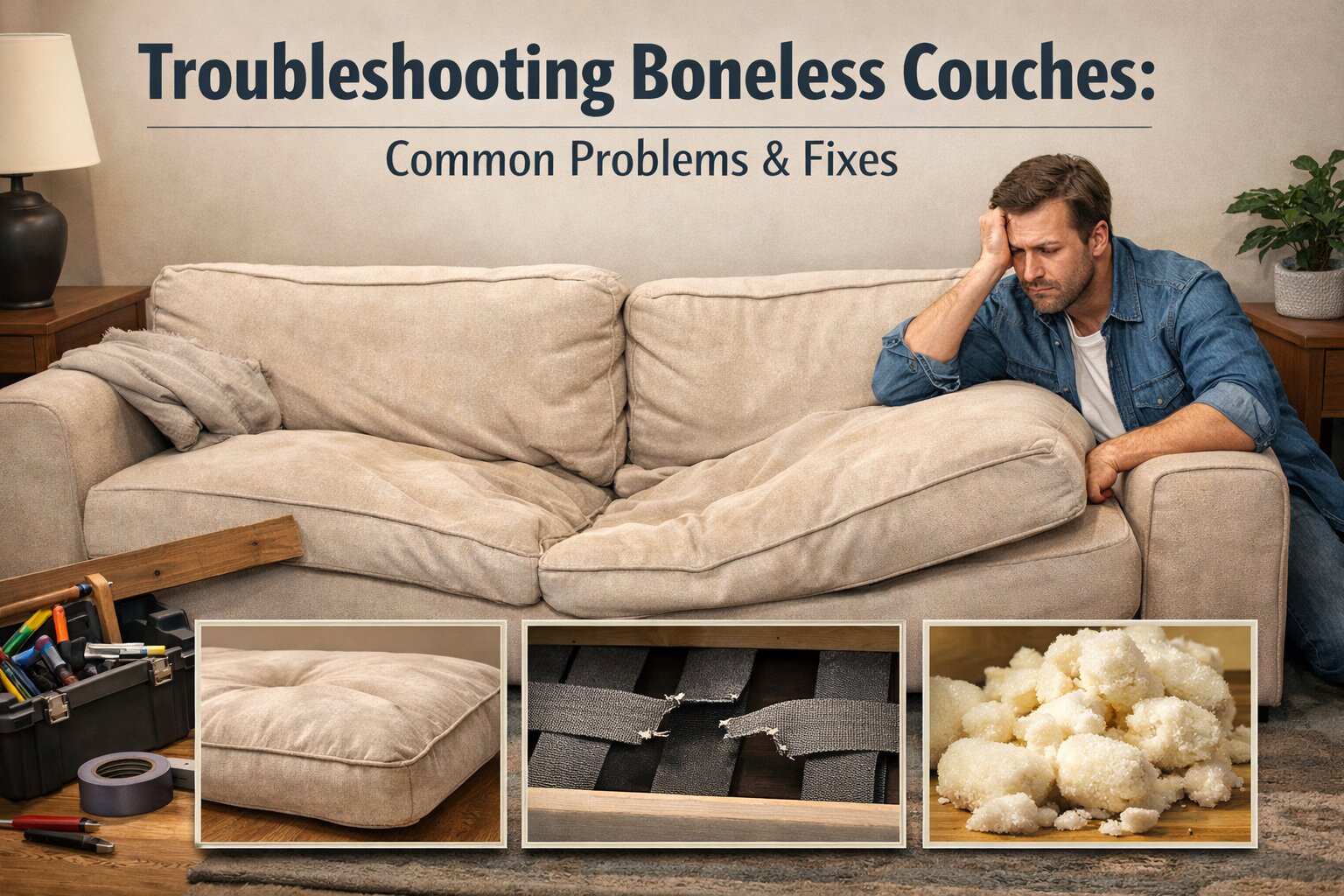
Boneless couches (a.k.a. “cloud couches”) are everywhere lately. They’re soft, modular, ship in a box and look great in modern homes. But because they rely on foam instead of a traditional frame, they come with their own quirks. Below are the most common boneless couch problems—and what you can do to fix or prevent them.
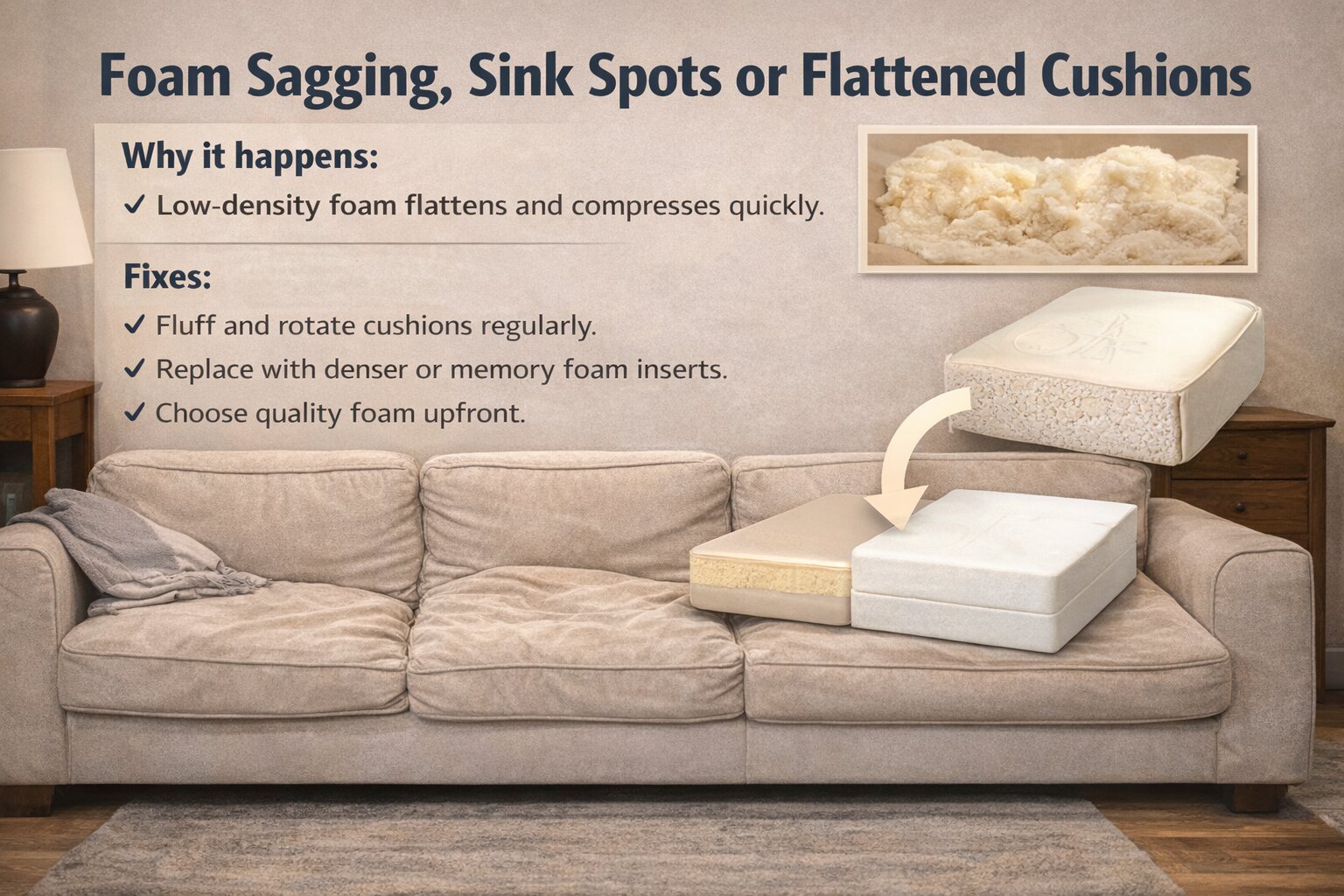
1) Foam sagging, sink spots or flattened cushions
Why it happens: Boneless couches get their structure from layers of foam. Lower‑density foam can feel plush initially but compresses quickly. According to experts, the higher the density of the foam, the longer it holds its shape and resists sagging. Premium foam in the 2.8–3.2 lb/ft³ range is ideal for families. In contrast, cheaper foam can flatten within a year or two.
Fixes & prevention:
-
Rotate and fluff modules regularly to distribute wear.
-
Add or replace foam inserts with high‑density cushions or memory‑foam toppers.
-
Choose quality foam upfront. Our How to choose a boneless couch guide explains foam density in detail—link this phrase to that article.
-
Consider a sturdier couch in high‑use areas. Low‑density couches work best in secondary spaces.
2) Sliding modules and gaps between pieces
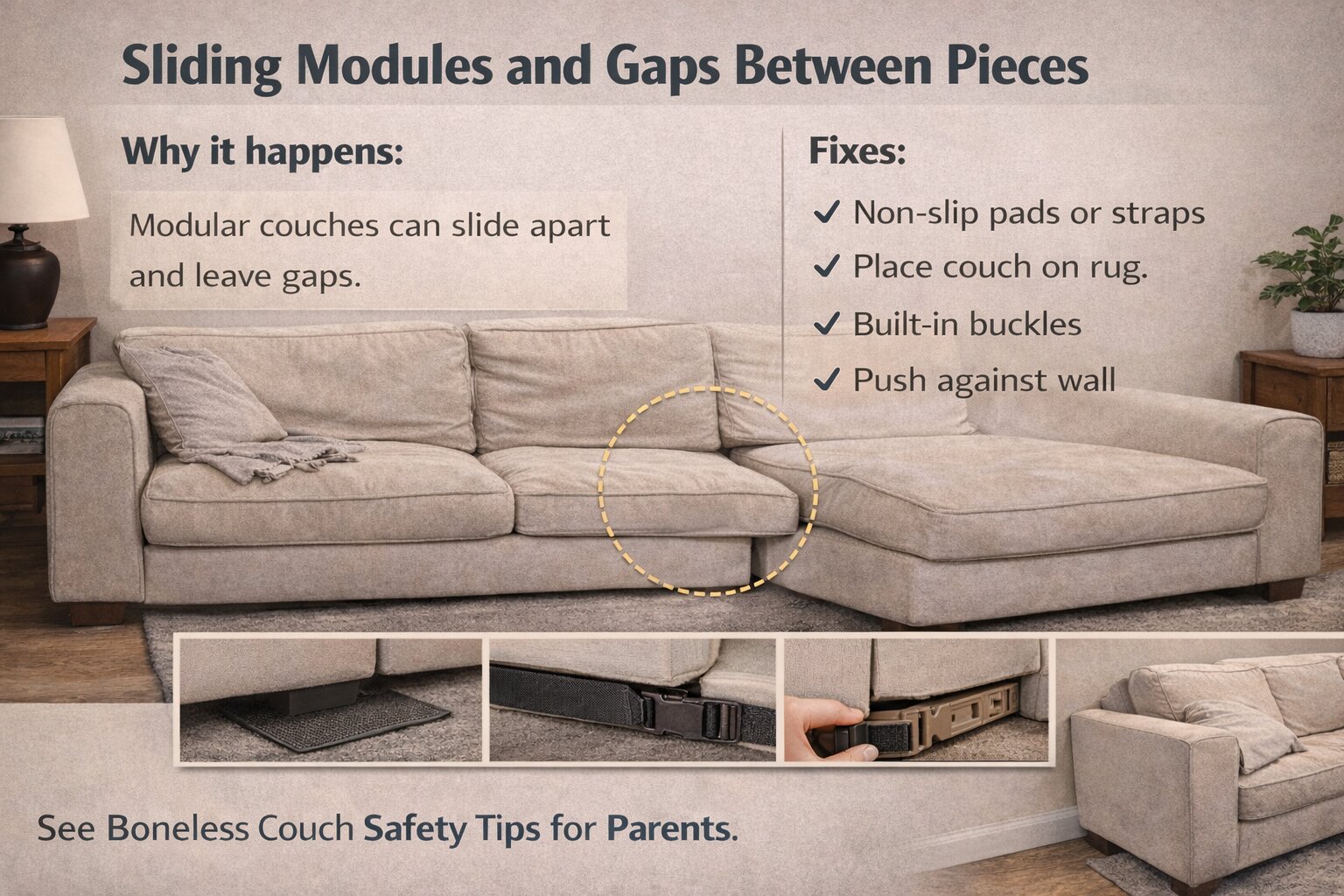
Why it happens: Many boneless couches are modular, but the modules don’t always hook together. Pieces can slide apart when kids flop down or adults shift position, leaving cracks between sections.
Fixes & prevention:
-
Use non‑slip pads or connector straps under each module to increase friction.
-
Place the couch on a rug to help grip the base.
-
Invest in a model with built‑in buckles or anti‑slide hardware.
-
Reconfigure modules snugly and push them against a wall for extra stability.
-
For more tips on creating a child-safe living space with modular furniture: Check out our essential Boneless Couch Safety tips for parents.
3) Couch feels too low or lacks back/neck support
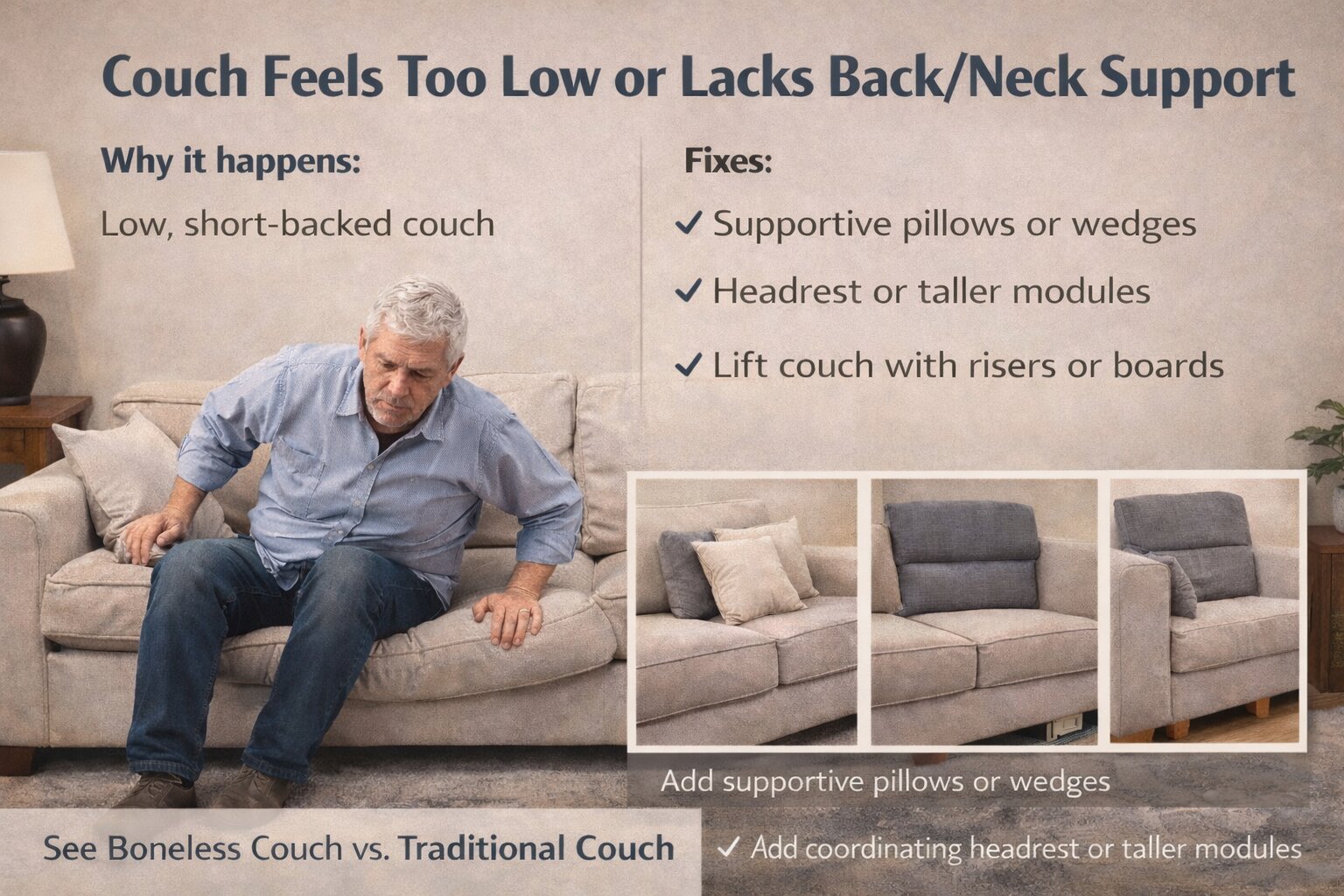
Why it happens: Boneless couches often sit closer to the floor and have short backs. Tall users and older adults may struggle to get up, and there may be little head support if the couch isn’t backed against a wall. Critics note that some people find the low seating profile less supportive compared to a traditional frame‑based sofa.
Fixes & prevention:
-
Add supportive pillows or wedges behind your back or neck.
-
Choose modules with higher backs or add a coordinating headrest.
-
Lift the couch slightly by placing plywood boards or risers under the modules.
-
If you need more structured support, consider pairing a boneless couch in a playroom with a traditional sofa in the main living room—check out our Boneless couch vs traditional couch article.
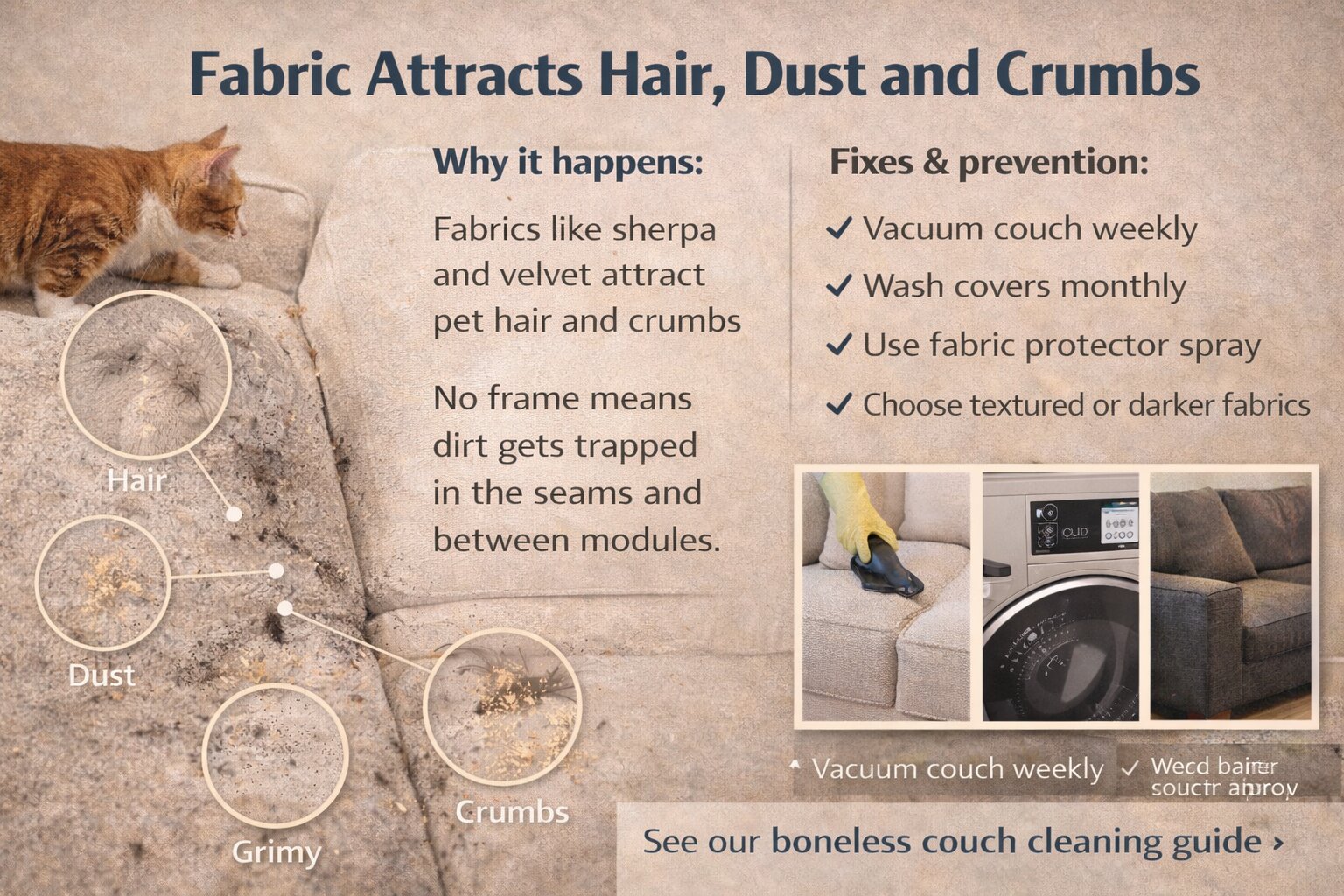
4) Fabric attracts hair, dust and crumbs
Why it happens: Dense fabrics like sherpa or velvet can act like magnets for pet hair and crumbs. Without a frame, dirt can get trapped in the seams and between modules. Atunus Home notes that light‑coloured boneless couches can show dust quickly, requiring frequent vacuuming.
Fixes & prevention:
-
Vacuum your couch weekly—use an upholstery attachment and wear rubber gloves to lift pet hair.
-
Wash removable covers monthly (machine‑wash on gentle and air‑dry).
-
Apply a fabric protector spray (PFAS‑free) to repel stains.
-
Choose textured or darker fabrics that hide dirt better.
-
For a more thorough breakdown of stain removal and fabric care: See our boneless couch cleaning guide for a complete, family-friendly maintenance routine.
5) General wear and tear (stains, tears, loose seams)
Over time, zippers can break, seams can loosen and stains accumulate. These issues are not unique to boneless couches, but without a rigid frame they can feel more pronounced.
Fixes & prevention:
-
Inspect seams and zippers periodically; repair loose threads before they grow.
-
Use throw blankets or machine‑washable slipcovers to protect the couch during messy activities.
-
Teach kids to avoid jumping on the couch to extend foam life.
-
If the damage is extensive and the foam has collapsed, consider replacing the entire module rather than patching a failing piece.
Final thoughts
Boneless couches are a cozy, flexible option for modern families—but they do require some care. By choosing high‑density foam, securing modules, adding extra support and keeping up with cleaning, you can enjoy all the “cloud couch” benefits without the headaches. If you run into other issues—like stubborn stains, sagging foam or shifting seats—use this guide as your troubleshooting checklist.
To learn more, check out our How to choose a boneless couch, Boneless couch vs traditional couch, Top boneless couches for families, How to clean a boneless couch and Styling & family-friendly tips articles.
