
Note: This post contains Amazon affiliate links. If you buy through them, we may earn a small commission at no extra cost to you.
Why choosing the right boneless couch matters
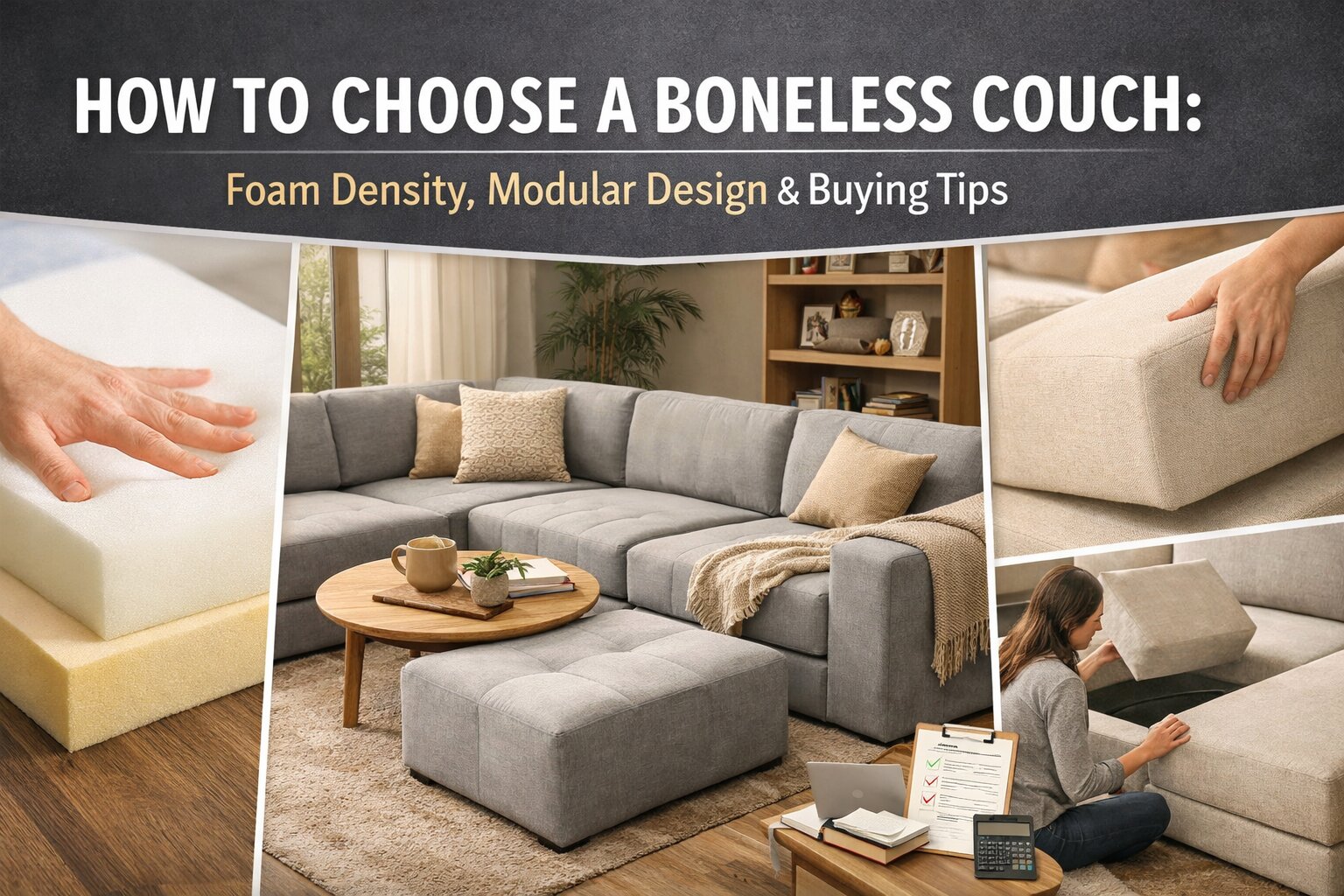
Boneless couches sound like a dream: a sofa with no hard frame, delivered in a box, that somehow expands into a plush cloud you can sink into. The idea has exploded across social media as designers lean into soft curves and deep cushions. Yet not all boneless couches are created equal. Because these sofas rely entirely on their foam for structure, the quality of that foam and the way the couch is built will determine how comfortable and durable it really is. Understanding what makes a good boneless couch ensures you don’t waste money on something that flattens out or doesn’t fit your space.
In this guide we break down what a boneless couch actually is, the key things to consider before buying, and how to test a couch before you commit.
What is a boneless couch?
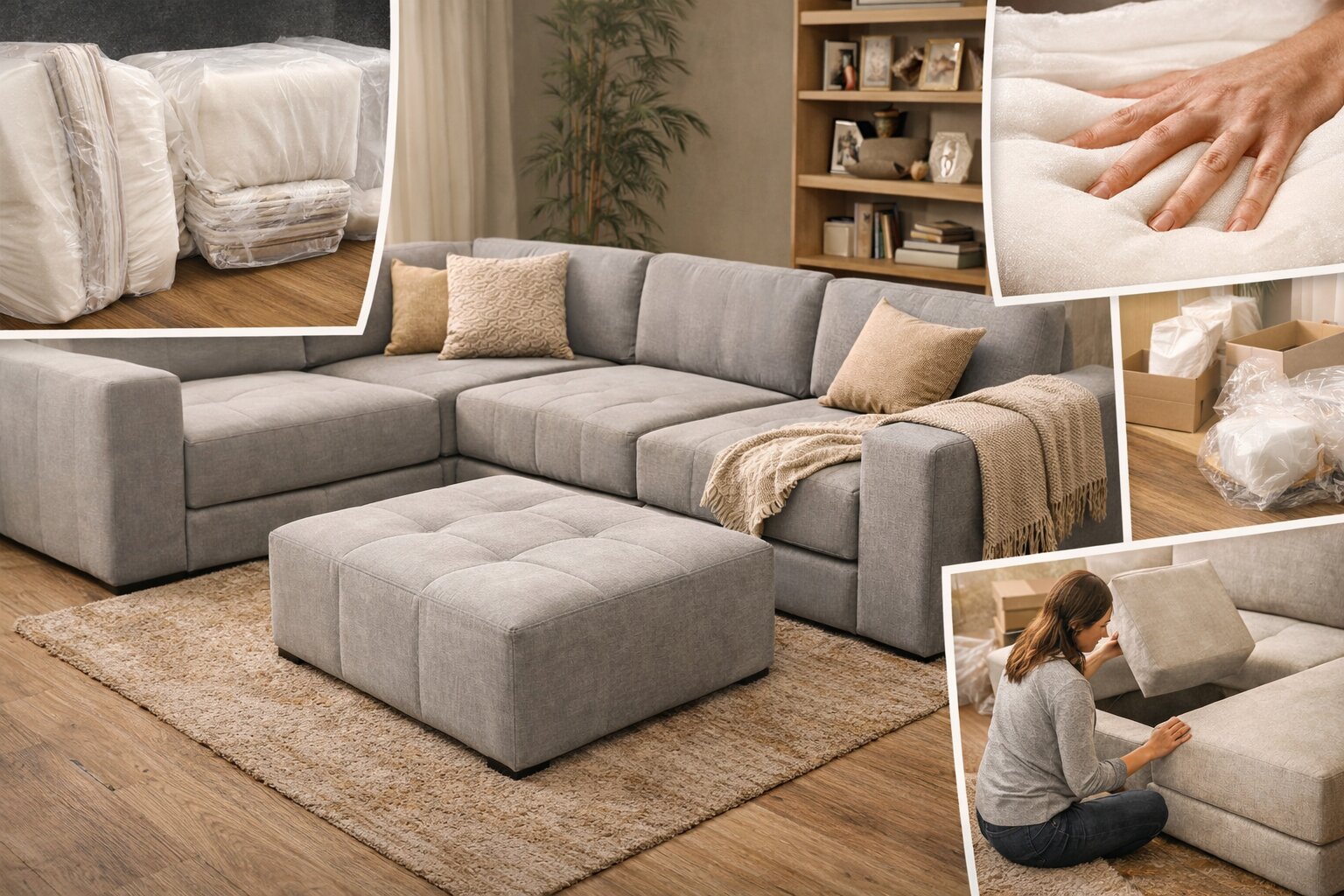
A boneless couch (sometimes called a cloud couch or frameless sofa) is built entirely out of dense foam and upholstery. It has no wooden or metal frame, no legs, and no suspension system. The “structure” comes from the foam itself, which is why foam quality is so important. Manufacturers vacuum‑compress the modules into compact boxes so they can be shipped through standard carriers. When the package arrives, you simply unbox the modules, remove the plastic and wait for the foam to expand.
Because there’s no hard skeleton, boneless couches feel different from traditional sofas: you tend to sink in more and sit lower to the ground. Many models are modular, meaning you assemble your couch from individual blocks that can be rearranged into different layouts.
1. Foam density & layering
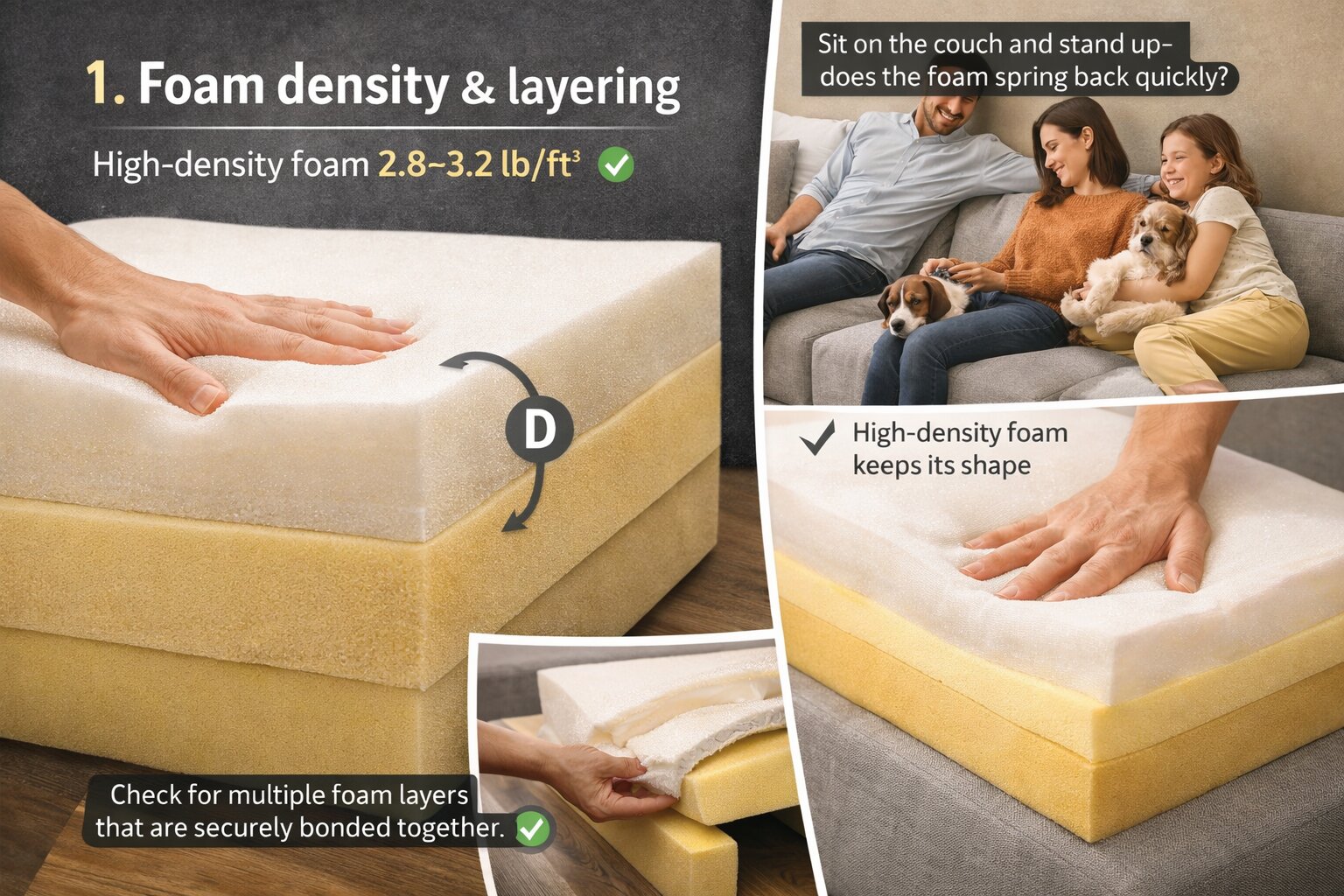
The biggest predictor of how long a boneless couch will last is its foam density. Foam density measures how tightly the foam cells are packed together, expressed in pounds per cubic foot. High‑density foam holds its shape longer and springs back after you stand up, while low‑density foam may feel soft at first but quickly loses support.
For family use—where kids, pets and daily lounging are a given—experts recommend foam with a density of 2.8–3.2 lb/ft³. This premium density provides the best balance of comfort and resilience, meaning the couch can last five to ten years with regular use. Moderate densities (around 2.0–2.5 lb/ft³) can work for occasional use or guest rooms, but anything lower will flatten quickly.
Also pay attention to layering. Many high‑quality boneless couches use multiple layers of foam: a firm base layer for support, and a softer layer on top for that sink‑in feel. The layers should be glued or zippered together so they don’t shift inside the cover.
Tips for testing foam quality
-
Sit on the couch and stand up—does the foam spring back quickly? Slow rebound or visible indentations mean low resilience.
-
Press down on the seat and back. You shouldn’t be able to feel the floor or a hard edge underneath.
-
Ask about foam specifications. Reputable brands will tell you the density and composition; avoid “mystery foam.”
2. Modular design & sizing
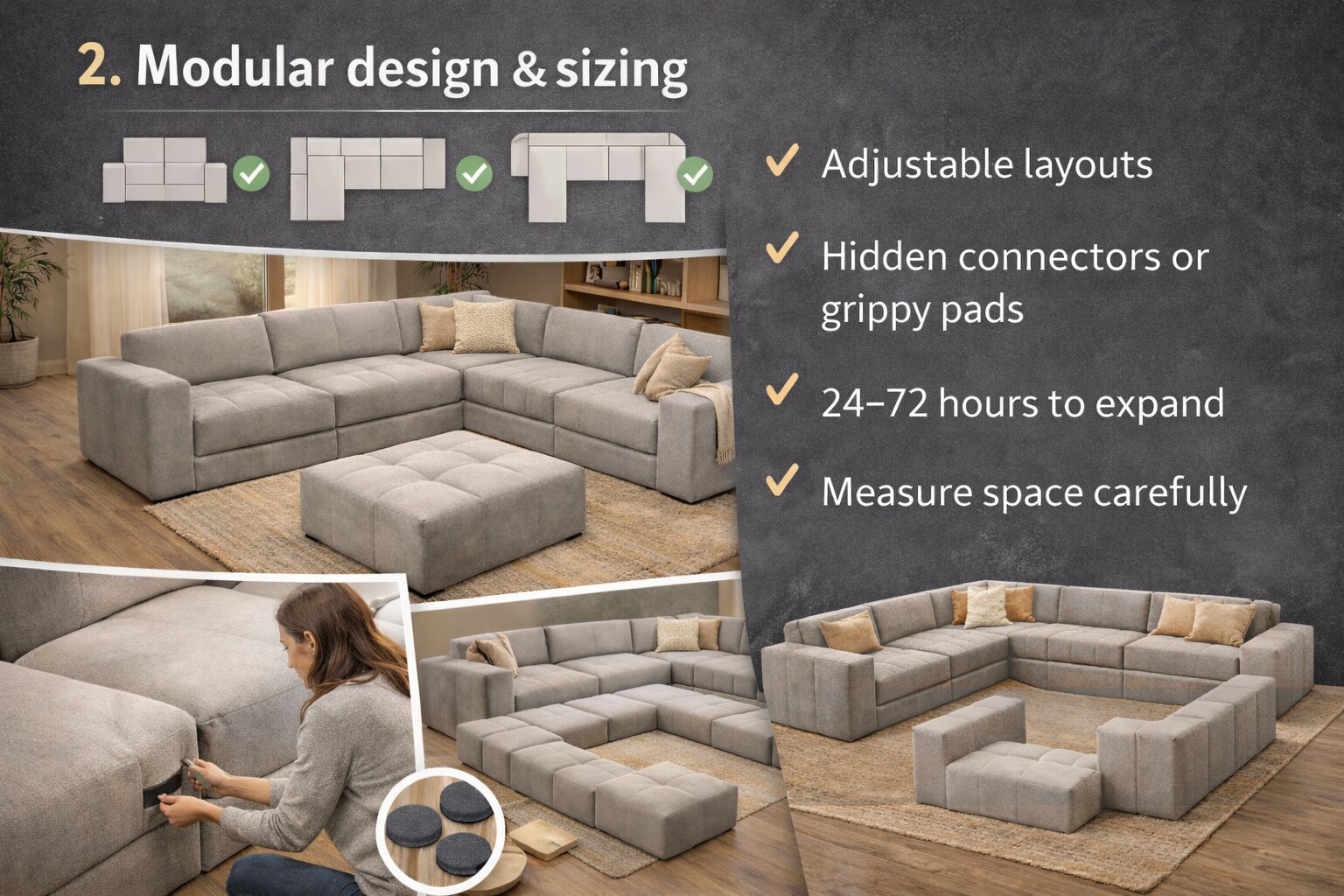
One of the biggest perks of boneless couches is their modularity. Instead of a fixed, bulky frame, you get individual blocks you can rearrange into straight, L‑shaped or U‑shaped configurations. This modular design makes boneless couches perfect for small apartments, playrooms and open‑plan living spaces because you can adjust the layout as your family’s needs change. It also allows manufacturers to vacuum‑compress the pieces for shipping.
When evaluating modular designs, consider:
-
Number of modules: Two or three blocks suit a small living room; four or more modules are better for large families or home theatres.
-
Connectors & anti‑slip features: Without connectors, modules can separate when kids flop around. Look for hidden buckles, Velcro straps or order a pack of grippy pads to keep pieces together.
-
Expansion time: Most foam needs 24–72 hours to fully expand. Plan to let the couch rest before inviting the entire family to jump on it.
Measure your space carefully and leave room for walkways. Because boneless couches sit lower than traditional sofas, they can make a room feel more open—but they also take up more floor area when arranged in a U‑shape.
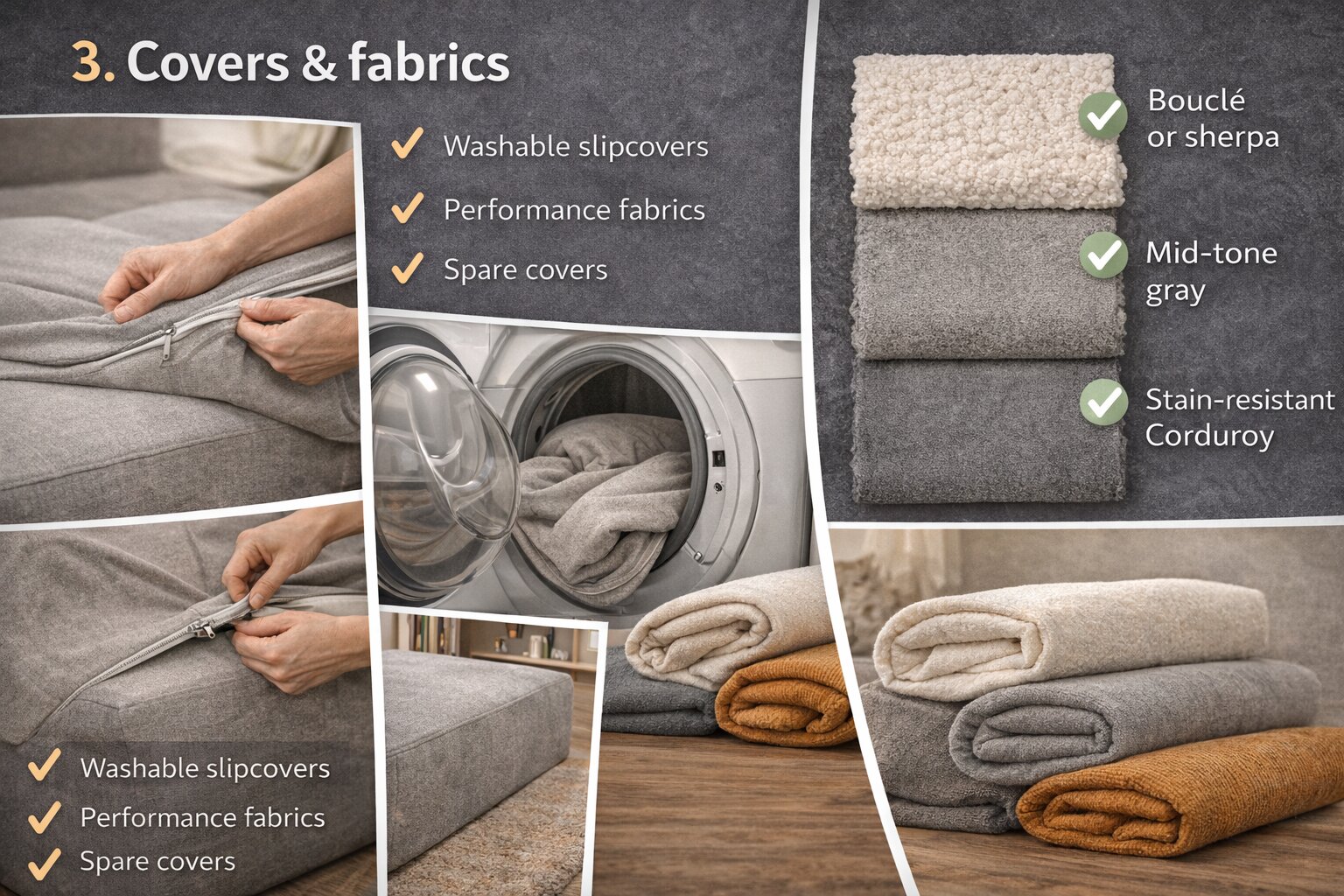
3. Covers & fabrics
Since you’ll be sitting, napping and possibly eating on this couch, choose covers that are removable and washable. Many boneless couches come with zip‑off slipcovers you can machine‑wash on a gentle cycle; just make sure to air‑dry them to avoid shrinking. Performance fabrics like chenille or polyester blends are durable and stain‑resistant. Textured fabrics such as bouclé or corduroy add cosiness but may attract lint and pet hair.
Colour is another practical choice: mid‑tone or dark hues hide stains better than white or cream. Some brands offer extra slipcovers so you can switch them out for different seasons or wash one while using another. If your model doesn’t include spare covers, buy a backup set to extend its life.
Quick fabric checklist
-
Machine‑washable: Check care tags for “W” (water‑safe) or “WS” (water and solvent) codes. Codes “S” or “X” mean professional cleaning only.
-
Performance finishes: Look for fabrics treated with stain‑guard technology; just avoid treatments containing PFAS chemicals.
-
Texture & feel: Bouclé and sherpa are trendy but can pill if over‑washed. Velvet feels luxurious but shows pressure marks.
4. Price, warranties & where to shop
Boneless couches range from a few hundred dollars to over $2,000 depending on size, foam quality and fabric. In general they’re more affordable than comparable traditional sofas, partly because shipping and storage costs are lower. That said, be wary of bargain prices: cheap models often use low‑density foam that collapses within a year.
Always ask about warranties. Many reputable brands offer 1–5 year guarantees on foam and seams; some offer lifetime coverage on modular connectors. A good warranty signals that the company stands behind its materials.
Shopping tips
-
Try before you buy: If there’s a showroom nearby, sit on the display model to test height, support and comfort. If not, read detailed reviews and watch unboxing videos to see how long the foam takes to expand.
-
Measure your space: Use painter’s tape to mark the footprint of the couch in your room. Remember that boneless couches are lower, so back cushions and pillows can raise the perceived height.
-
Check return policies: Because foam couches expand, some brands restrict returns. Confirm the window for returns and whether return shipping is free.

Conclusion & next steps
Choosing a boneless couch isn’t just about picking a trendy piece of furniture—it’s about finding the right blend of support, flexibility, comfort and value for your family. Focus on high‑density foam, modular features, washable covers and a warranty that matches your budget. Then decide which style fits your space: a small set for a studio, a large sectional for movie nights or something in between.
Want to see specific examples? Check out our curated list of Top Boneless Couches for Families (2026) to see how these criteria translate into real products. Still undecided between a boneless and a frame‑based sofa? Our Boneless Couch vs Traditional Couch comparison breaks down the differences in comfort, durability and price. And once you bring your new sofa home, our How to Clean a Boneless Couch guide will help you keep it looking fresh.
If you’re ready to shop, here are a few popular options to get started:
Note: This post contains Amazon affiliate links. If you buy through them, we may earn a small commission at no extra cost to you.
Further reading:
-
Boneless Couch for Families: Our Real‑Life Guide – our pillar article.
-
Best Boneless Couches for Families in 2026 – comfort & budget picks.
-
Boneless Couch vs Traditional Couch – a comparison of structure and durability.
-
How to Clean a Boneless Couch – step‑by‑step cleaning tips.
-
Is a Boneless Couch Good for Families With Kids? – our existing post on safety.
