

Boneless couch vs traditional couch: Boneless couches (frameless and foam-filled) offer sink-in comfort, easy shipping, modular layouts and washable covers. Traditional couches provide structured support, classic silhouettes and longer repairable lifespans. Choose boneless for casual spaces and ease of moving; choose traditional for upright support and formal settings.
Boneless Couch vs Traditional Couch: Which Is Better for Families?
This post contains affiliate links; as an Amazon Associate, we may earn from qualifying purchases.
When comparing a boneless couch vs traditional couch, families want to know which type offers more comfort, lasts longer, and fits real life (kids, pets, moving houses). We’ve broken down every factor—comfort, durability, cleaning, delivery and safety—so you can choose the right sofa style for your home.
What is a boneless couch?
A boneless couch is a frameless, foam‑based sofa. There’s no wood or metal frame; the entire shape comes from dense foam modules wrapped in fabric, which is why quality foam matters so much. These modules can be vacuum‑sealed into small boxes, making delivery easier for upstairs apartments and tight hallways.
What is a traditional couch?
A traditional couch uses a rigid frame (usually wood or metal) and springs to support the cushions. The structure keeps the silhouette consistent and distributes weight evenly. It often offers higher seat height and firmer support than boneless styles.
Comfort: lounge vs structure
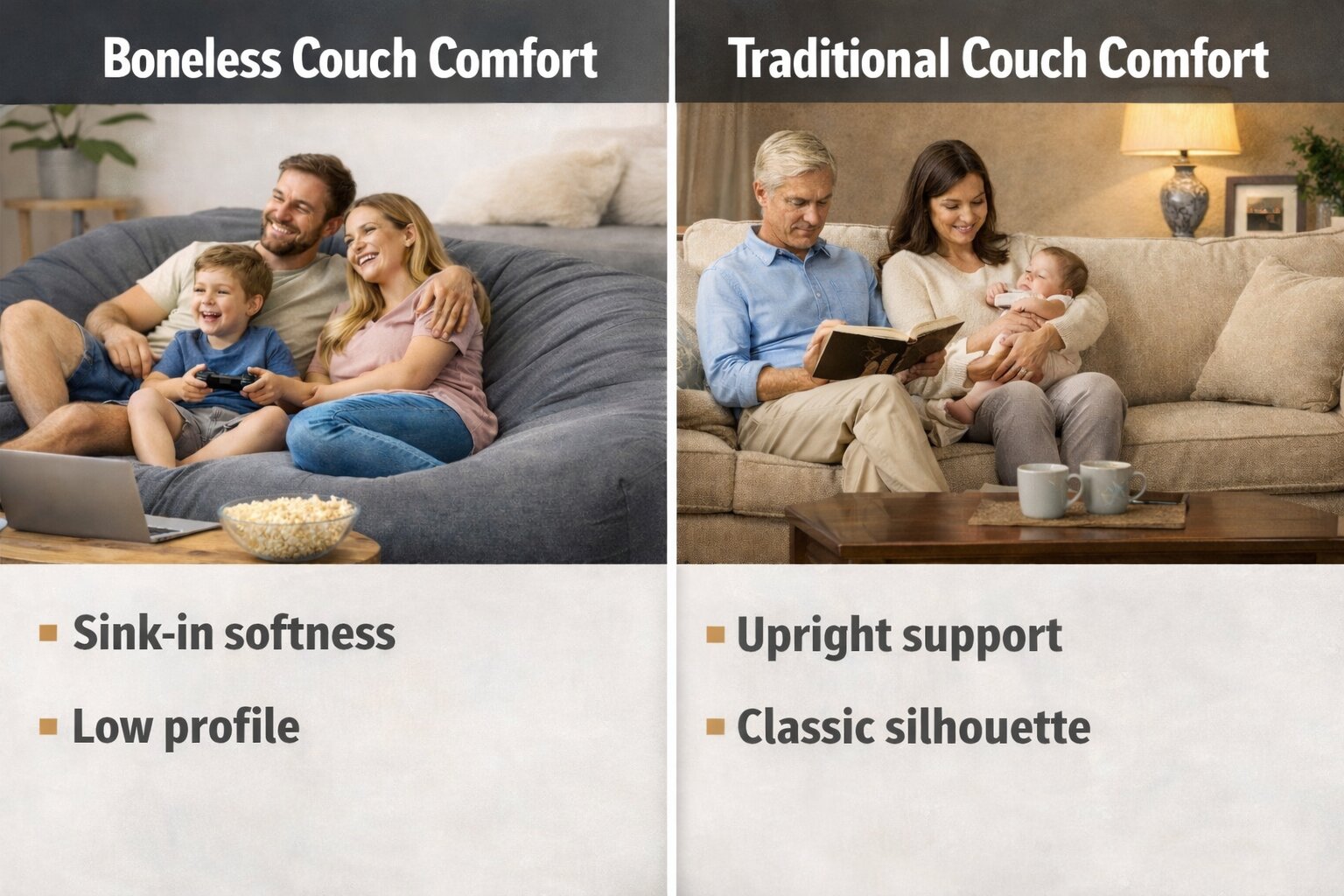
Boneless couch comfort
-
Sink‑in softness: Boneless couches feel casual, lounge‑friendly and sometimes almost like a giant pillow. Perfect for movie nights, playrooms and relaxed family spaces.
-
Low profile: Sitting low to the ground can be cozy but might not be ideal for older adults.
Traditional couch comfort
-
Upright support: The frame and springs provide steady, even support for sitting upright or hosting guests. Good for reading, nursing a baby or when you don’t want to sink down.
-
Classic silhouette: Higher seat height and back, often a more formal look.
Durability & lifespan
Boneless durability depends on foam density. High‑quality couches use premium foam (2.8–3.2 lb/ft³) and can last 5–10 years with regular use. Lower‑density foam (2.0–2.5 lb/ft³) is cheaper but may flatten in 1–2 years. Once the foam loses its shape, the entire couch feels worn out.
Traditional sofas can last longer because their frames and springs are replaceable. However, cheap frames can also warp or squeak over time. Overall, if you invest in quality materials, both types can last a decade or more.
Curious how boneless designs stack up against traditional frames over the long haul? Check out our detailed breakdown of boneless couch longevity here.
Moving & delivery
Boneless couches win for delivery: they’re compressed and boxed, which saves money on shipping and makes them easy to maneuver into an upstairs apartment. A traditional couch usually arrives fully built (or partly assembled), requiring freight delivery and more muscle.
Check out our favorite boneless couches on Amazon:
110″ L-Shaped Modular Sectional Sofa with Chaise
108” Modular Sectional Sofa, Cloud Sectional Couch with Deep Seat
Affiliate disclosure: I’m part of the brand’s affiliate program, so I may earn a small commission if you buy through my link—at no extra cost to you. I only share what I genuinely experienced.
Cleaning & maintenance
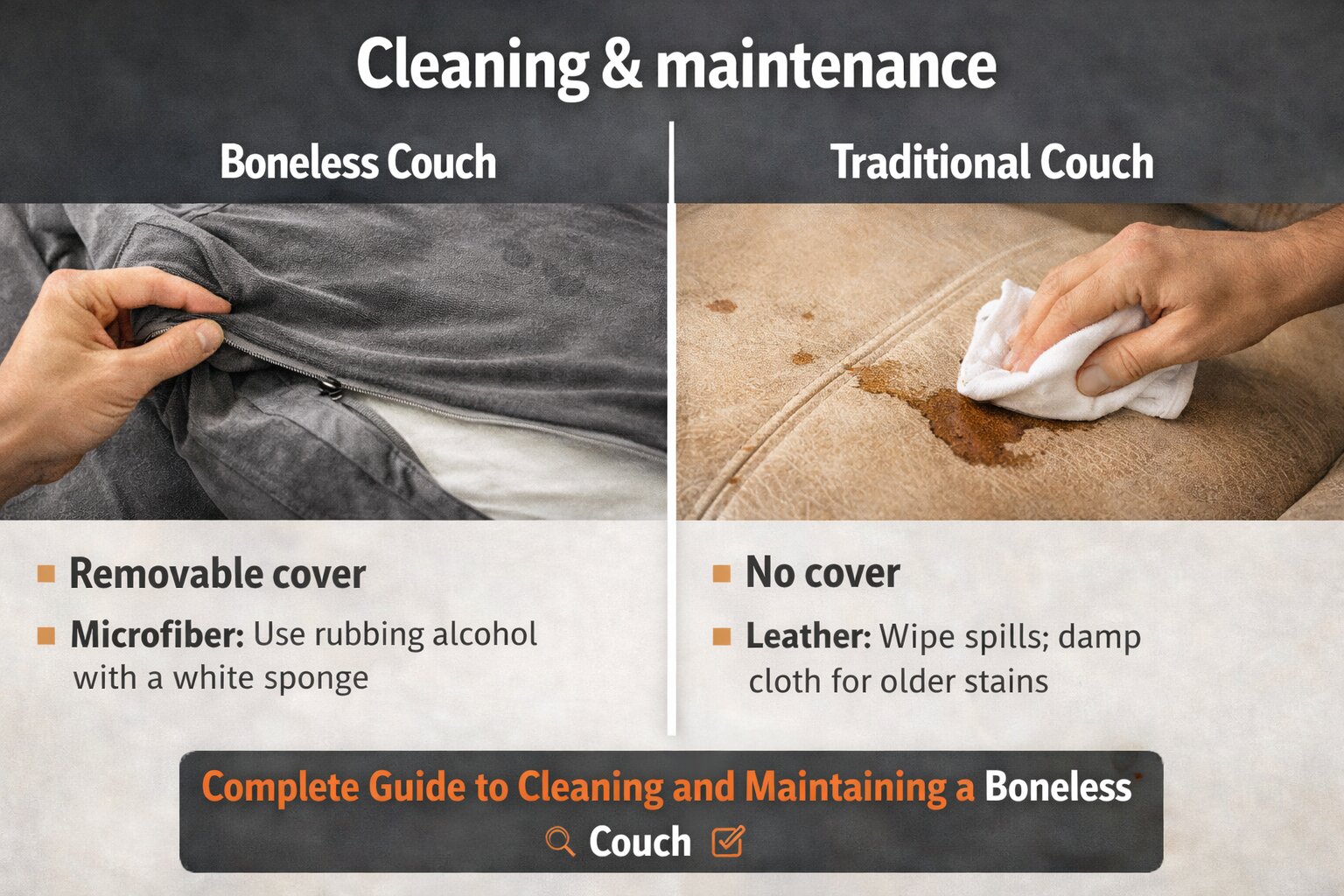
Boneless couches often have removable covers, which is a big advantage. Cleaning experts advise washing removable covers once a month and vacuuming weekly. Spot clean stains by fabric type:
-
Microfiber: Use rubbing alcohol and a white sponge; the alcohol evaporates quickly and avoids water marks.
-
Leather: Wipe spills immediately; for older stains, gently dampen a cloth and wipe from the centre outward.
Traditional couches can be harder to clean if they lack zip‑off covers. You may need professional cleaning for stains or slipcover the entire couch. If you have kids or pets, washable slipcovers are essential.
For a step-by-step breakdown of keeping your sofa pristine, check out our: Complete Guide to Cleaning and Maintaining a Boneless Couch
Safety & kid-friendly features
Boneless couches are usually rounded and soft, which reduces the risk of kids bumping into hard corners. However, they’re lower to the ground and modules can slide if they don’t have connectors—a potential issue for active toddlers.
Traditional couches have harder edges but typically stay in one piece; there’s no risk of sections drifting apart. Families with toddlers may want corner protectors on traditional couches.
Safety is a top priority for any home with little ones. Read our guide on Boneless Couches for Families: Comfort, Safety & Buying Tips to ensure you choose the right model for your space.
Which one should your family choose?
Choose a boneless couch if you need:
-
A casual, flexible lounge piece.
-
Easy delivery or frequent moving.
-
Modular seating for playrooms or basements.
-
Washable covers for messes.
Choose a traditional couch if you need:
-
Firm, upright support for everyday adult seating.
-
A classic look for the main living room.
-
Durability from a repairable frame and spring system.
Final takeaway
When weighing boneless couch vs traditional couch, think about your priorities: comfort style, cleaning convenience, longevity and how often you move. For many families, the best solution is to use a boneless couch in casual or secondary spaces and a traditional sofa in the main living room. Either way, buying quality foam and fabric will pay off in the long run.
