
Quick heads-up: This post may contain affiliate links. If you buy through them, we may earn a small commission at no extra cost to you.
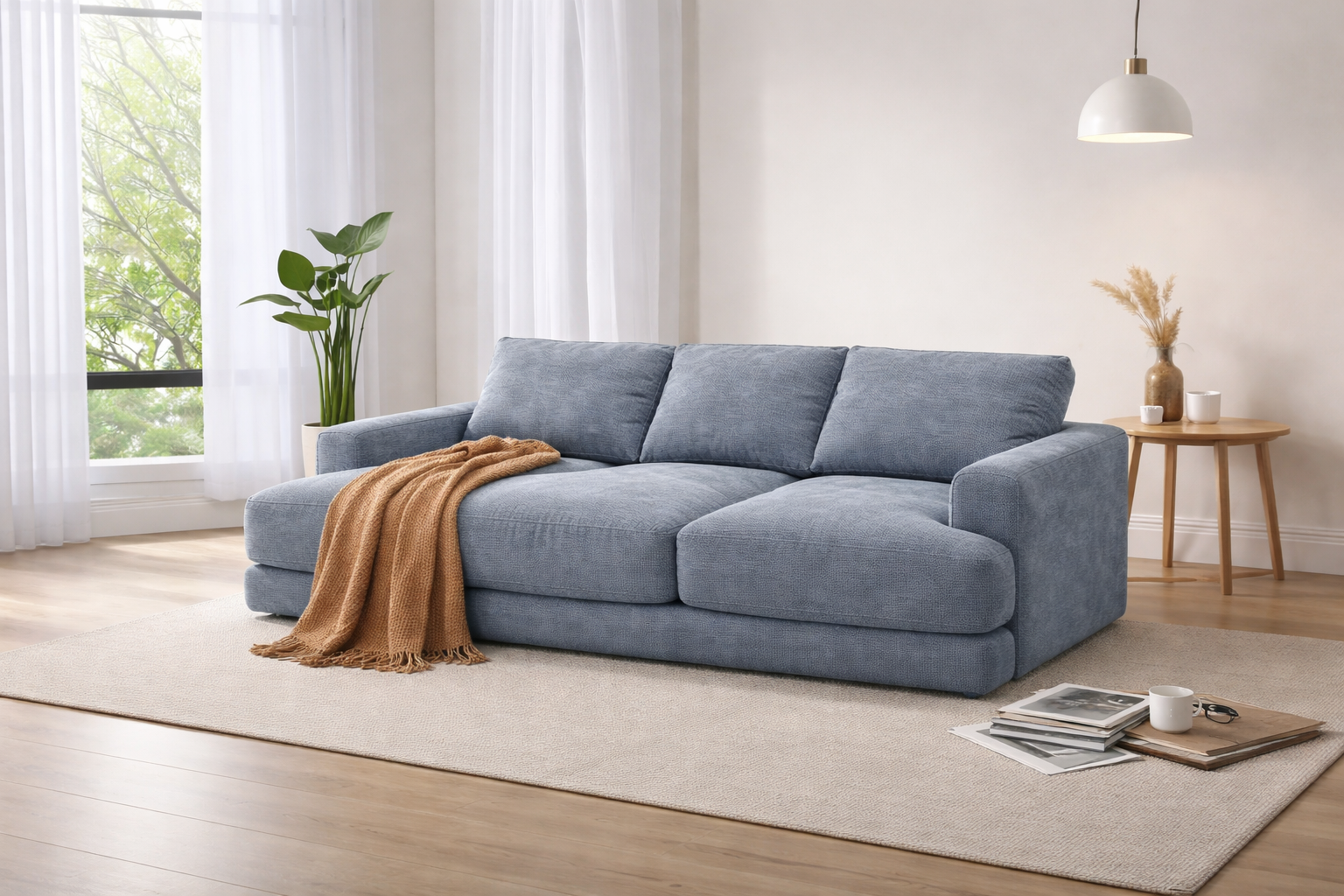
If you’ve been on TikTok for more than five minutes, you’ve probably seen the “boneless couch” pop up everywhere — the giant, squishy, cloud-looking sofa that shows up in a box and somehow turns into a full couch. It’s not just social media hype either. In 2025, “boneless couch” showed up as one of the most searched viral home products, which honestly tracks… because once you see one unbox, you kinda want one.
We’ve been living with the boneless couch idea long enough to have opinions (and crumbs). So this is our family-style, real-life guide — what it is, what it’s great at, what it’s not great at, and how to pick one without accidentally buying a giant foam regret.
What is a boneless couch, really?
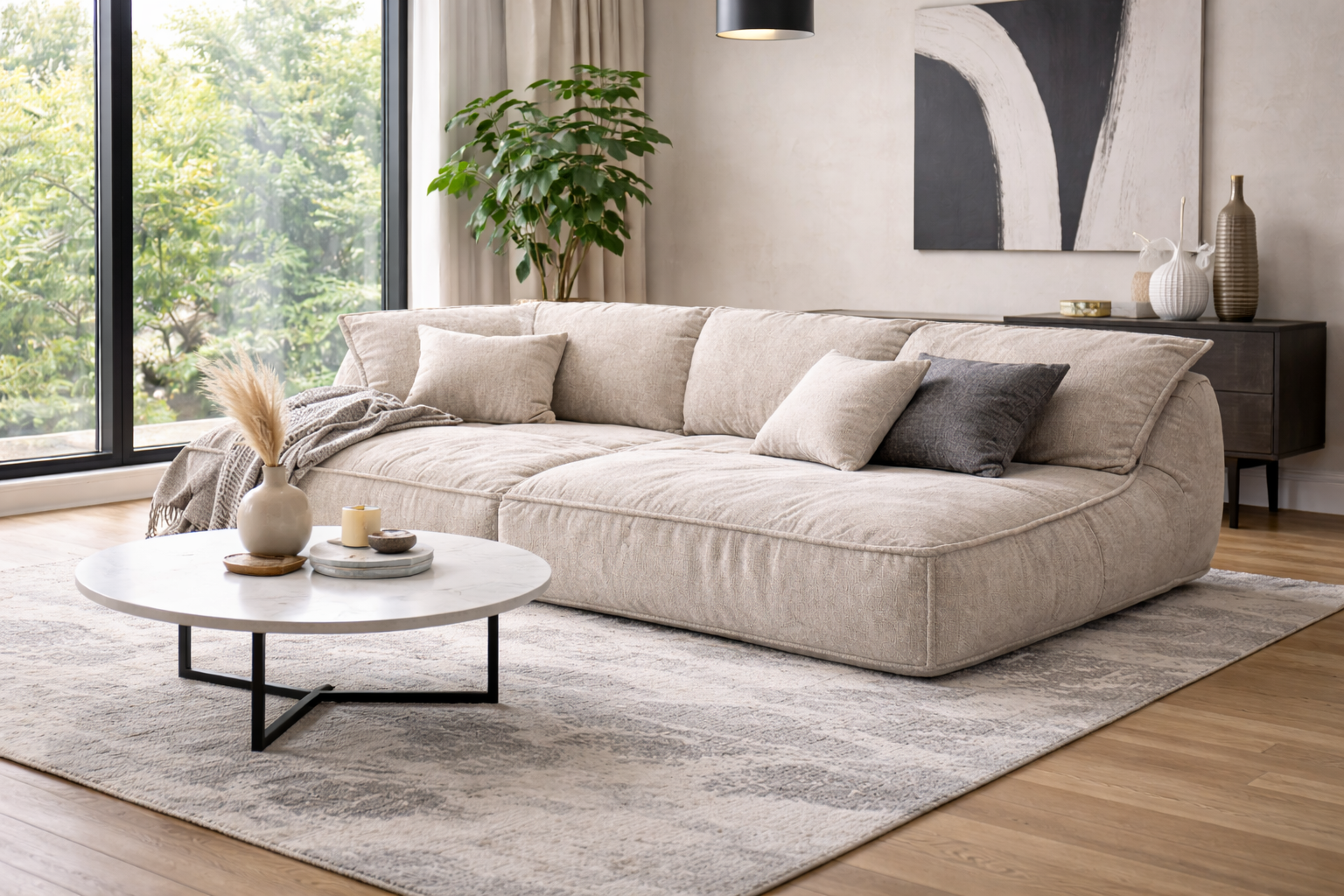
A boneless couch is basically a frameless couch – no wood frame, no metal frame, no legs, no suspension system. The “structure” comes from dense foam layers wrapped in upholstery fabric.
Think: mattress-in-a-box… but make it a sofa.
Why it ships in a box (and why families love that)
Because there’s no rigid frame, brands can compress the foam, vacuum-seal it, and ship it like a big package. Many models just need you to open the packaging and let the foam expand (usually 48–72 hours for full fluff).
This is a huge win if:
-
you live in an apartment with narrow hallways
-
you hate delivery scheduling drama
-
you don’t want to assemble furniture like you’re in an escape room

Why boneless couches got so popular
Here’s what makes people obsessed:
1) The comfort is very “sink-in”
Most boneless couches are meant for lounging — movie nights, kids piling on, naps you didn’t plan. That “cloud couch” vibe is real (especially with softer foam builds).
2) They can be more budget-friendly
A lot of boneless options sit in a lower price range than big traditional sectionals — one reason they’ve caught on with families setting up playrooms, basements, or “second living room” spaces.
3) Modular layouts feel made for family life
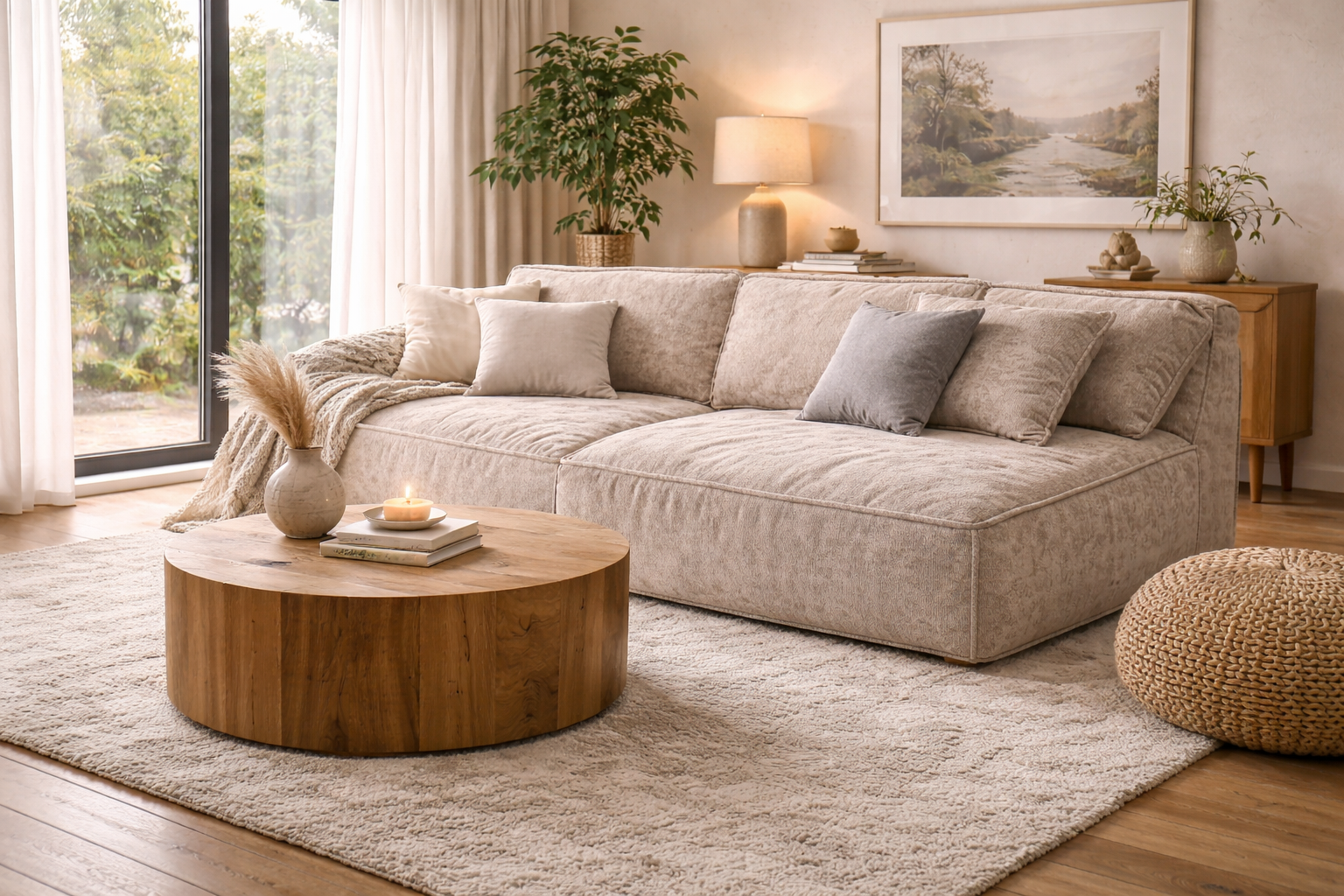
Many boneless sofas are modular, and that’s the secret sauce: you can reconfigure pieces for different seasons of life (toddler chaos phase, hosting phase, “why do we own so many blankets” phase).
Pros and cons (family edition)
Let’s be real: this is where the decision gets made.
What we love about boneless couches
-
Safer feel for kids: no hard corners, no sharp edges, no stubbed toes on couch legs (the amount of pain a couch leg has caused in our house… whew).
-
Easy setup: it’s basically “open package, wait, flop down.”
-
Easy to move: compared to dragging a traditional sofa, boneless pieces are usually much more manageable.
-
Great for playrooms + casual living rooms: kids can lounge, climb, sprawl, and it doesn’t feel too precious.
What we don’t love (but you should know)
-
Low to the ground: this is a common complaint. Low seating can be annoying if you have knee issues or just don’t enjoy the “getting up from the floor” lifestyle.
-
Modules can slide: on slippery floors, pieces may drift apart if they don’t connect well. This can be a big deal with kids launching themselves onto the couch at full speed.
-
Foam quality is everything: cheaper foam may feel nice at first, then flatten or lose shape faster.
Want the full “is it worth it?” angle? Link here:
How to choose the right boneless couch (so you don’t hate it in 60 days)
If you only remember one thing: foam density matters most.
1) Foam density (this decides comfort and durability)
Since boneless couches rely on foam for structure, higher-density foam holds shape longer and resists sagging better. For heavy daily use (kids + pets + lounging), premium foam density is often cited around 2.8–3.2+ lb/ft³.
This lines up with what experts say: higher-density compressed foam is the difference between “this still looks good in year 3” and “why does it look like a pancake now?”
For durability detail, link this:
2) Configuration: loveseat, sectional, or modular chaos?
Ask yourself:
-
Is this your main living room couch (daily use)?
-
Or a secondary couch (playroom, basement, guest space)?
Boneless couches can be amazing in secondary spaces. For a main living room, you want:
-
thicker foam
-
better covers
-
modules that stay put (connectors or anti-slip features help)
For the “best for family living rooms” angle, link:
3) Fabric choices: pick based on real life, not Pinterest
If you have kids/pets, you’ll probably care about:
-
removable + washable covers (huge win)
-
darker colors or textured fabric that hides life
Sherpa looks cozy, but it can cling to crumbs and pet hair. Velvet can look elevated, but can show pressure marks. Corduroy is forgiving and cozy.
4) Height and back support (the part people forget)
Some boneless couches sit low and have shorter backs, which can feel unsupportive if you like sitting upright for long stretches.
If you’re tall or want head/neck support, plan on:
-
extra back pillows
-
pushing it against a wall
-
choosing a deeper model with a higher back profile
Setup: what to expect on delivery day
Most boneless couches arrive compressed. Your “assembly” is basically:
-
Put it where you want it first (because once it expands… it’s a couch, congrats).
-
Open the packaging carefully.
-
Let it expand fully (many people report 48–72 hours to reach final shape).
Kid tip: if your kids are the type to body-slam furniture, keep them from jumping on it before it fully expands. Half-fluffed foam is a weird phase.
Cleaning + maintenance (family-proof version)
If the cover is removable and washable, life gets easier — period.
Basic routine that actually works:
-
vacuum weekly (crumb patrol)
-
spot-clean immediately (because stains set fast in family houses)
-
wash covers as needed (check label instructions)
For the full step-by-step guide, link:
Boneless couch safety (kids + pets)
Boneless couches feel safer because they’re soft and often rounded, but there are still two family risks to manage:
-
anti-slip pads under modules
-
area rug underneath
-
choosing models with connectors/buckles
Sliding modules
If pieces separate, kids can slip between them. On tile/wood floors, sliding can be worse.
Fixes we’ve seen work:
Very low seat height
Low height can be harder for some adults and grandparents, and it can encourage kids to treat it like a trampoline (because it feels like one).
If you want the full parent-focused checklist, link:
Our current Amazon boneless couch picks (affiliate)
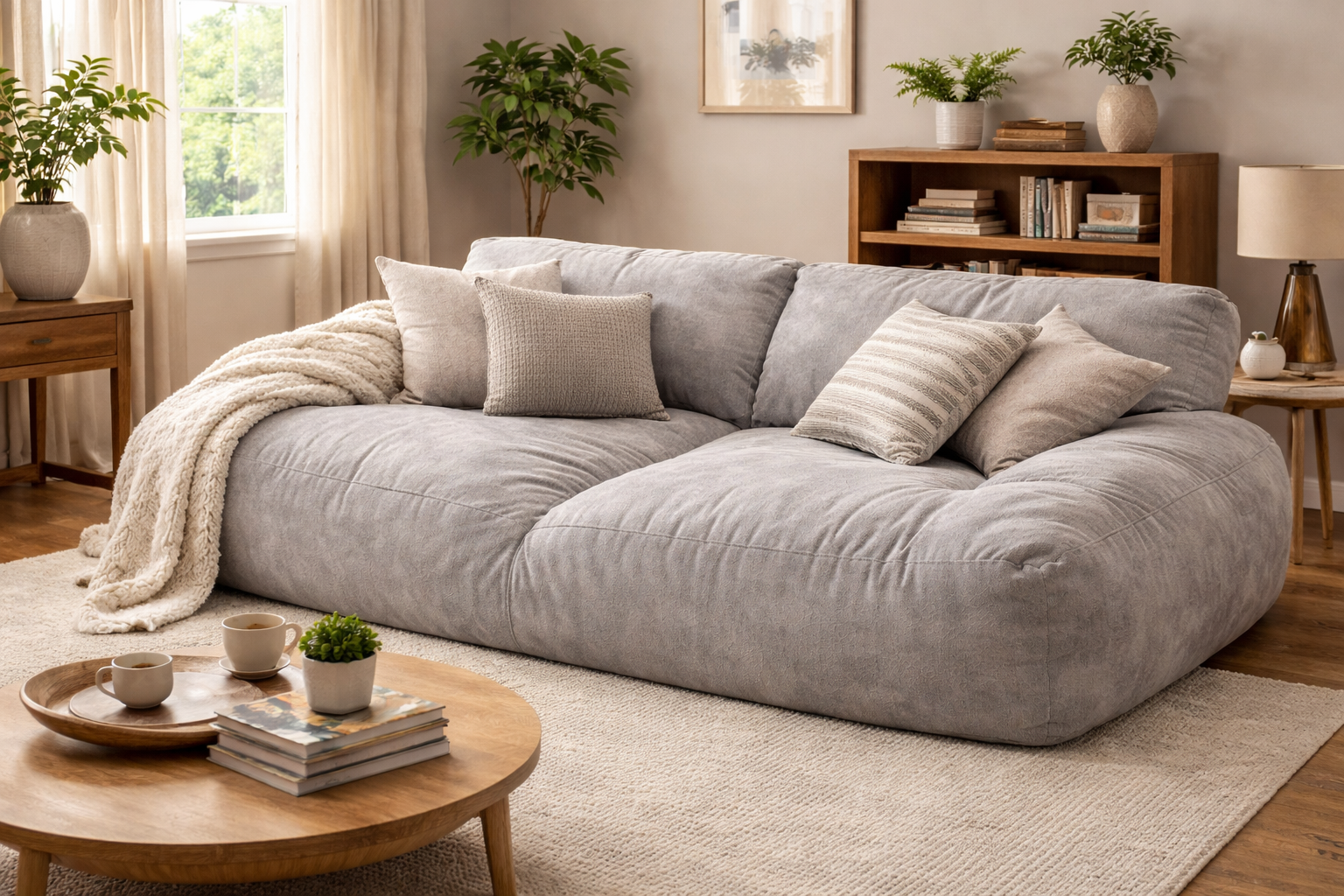
If you want to shop the style without digging for hours, these are popular options you can start with:
Affiliate disclosure: I’m part of the brand’s affiliate program, so I may earn a small commission if you buy through my link—at no extra cost to you. I only share what I genuinely experienced.
Should you get a boneless couch?
Here’s our honest take:
A boneless couch is a great buy if you want:
-
a comfy lounge space
-
flexible modular seating
-
something easy to deliver + set up
-
a family-friendly soft vibe (especially in playrooms, basements, casual rooms)
You should think twice if:
-
you need a tall, structured, formal sofa silhouette
-
you want high back support without relying on pillows
-
you’re buying ultra-cheap foam for daily use (foam quality matters a lot)
If you’re still choosing between styles, link:
FAQ (SEO-friendly)
Are boneless couches actually durable?
They can be – but durability depends heavily on foam quality and usage. Higher-density compressed foam is commonly cited as lasting longer and resisting sagging better.
How long does a boneless couch take to expand?
Many models take about 48–72 hours to fully expand after unboxing.
Are boneless couches good for families with kids?
They can be great because they’re soft and low-risk for sharp edges. The main watch-outs are sliding modules and low seat height (which can encourage wild jumps).
Are boneless couches cheaper than traditional couches?
Often yes, especially once you factor in shipping and storage. Some sources note boneless couches tend to be more affordable than same-size traditional couches.
