
Disclosure: As an Amazon Associate, Housenique earns from qualifying purchases. Some links in this article are affiliate links, which means we may earn a small commission at no extra cost to you if you make a purchase. We only recommend products we genuinely believe in.
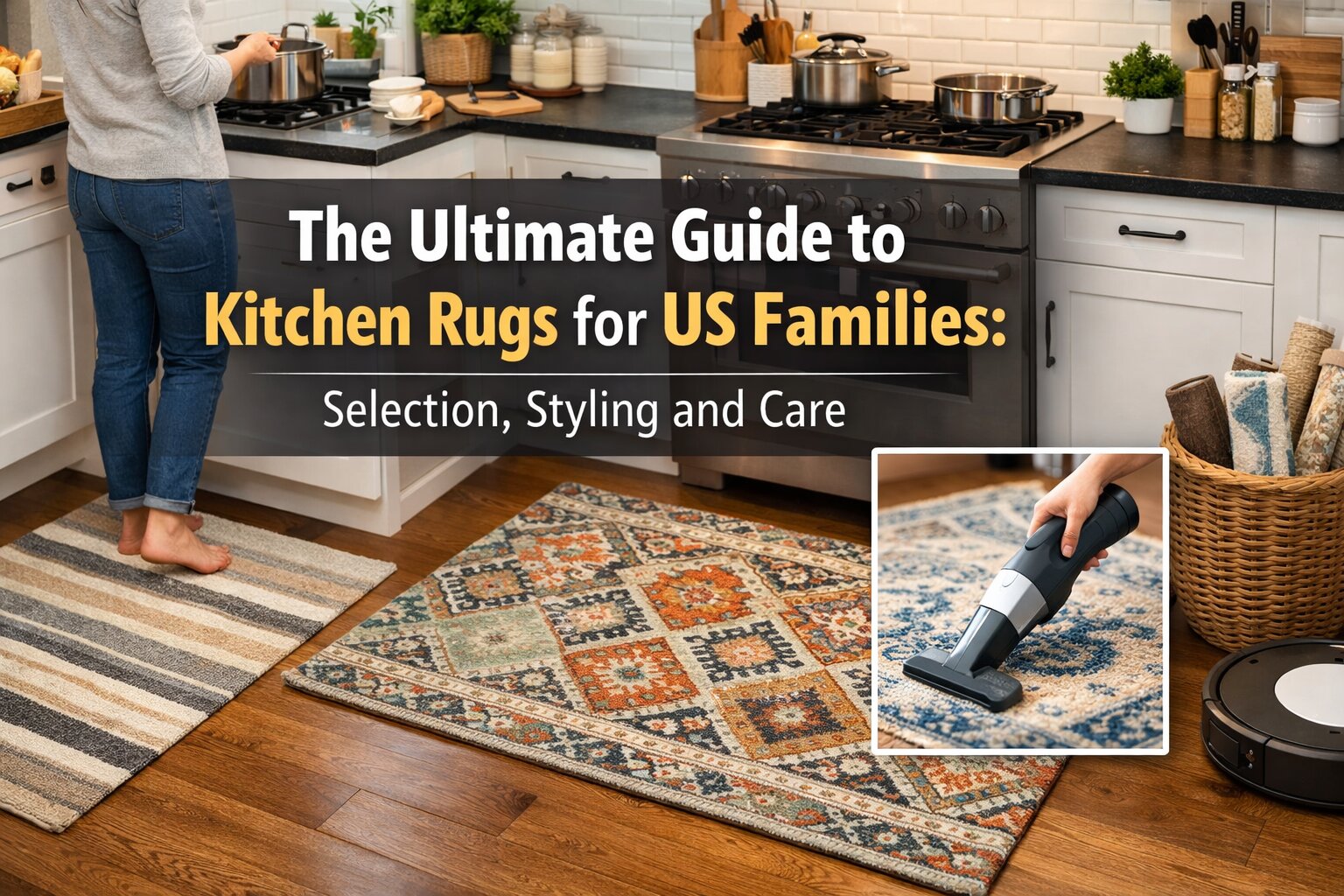
There’s a moment every morning when you walk into the kitchen to make coffee, and your bare feet hit that cold, hard tile floor. It’s not exactly a warm welcome to the day. After testing and researching dozens of kitchen rugs for our Home & Kitchen buying guides here at Housenique, we’ve come to one firm conclusion: the right kitchen rug changes your whole experience of the space — not just aesthetically, but functionally, too.
If you’re a US homeowner or a parent trying to balance style with the realities of spills, pets, and kids running through the kitchen, this guide is written for you. We cover everything from choosing the right size and material to the latest 2026 design trends — plus our honest take on what’s worth spending more on and what isn’t.
Let’s dive in.
Why We Think Every Kitchen Needs a Rug
We hear this from readers all the time: “Is a kitchen rug actually necessary?” In our experience, yes — and not just for looks. Here’s what a well-chosen kitchen rug genuinely does for your home:
Comfort while cooking: Standing on tile or hardwood for 30–45 minutes while cooking a full meal creates real lower back and knee fatigue. A cushioned rug makes a noticeable difference, especially if you cook daily. We explore this in detail in our guide to [anti-fatigue kitchen rugs vs mats: which is more comfortable].
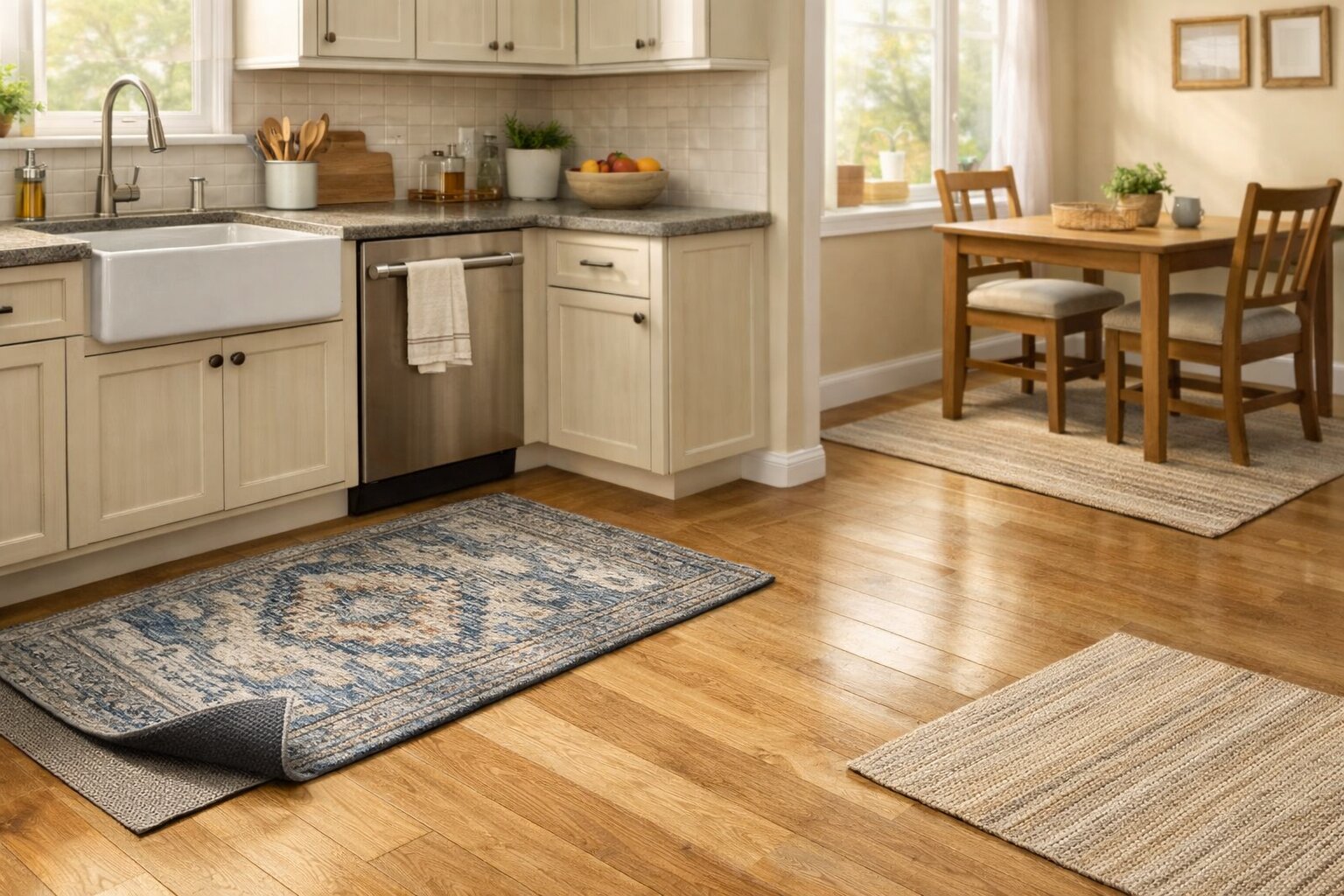
Slip and fall prevention: The area around your sink, dishwasher, and fridge is exposed to drips and splashes constantly. A non-slip rug with rubber backing dramatically reduces the risk of slipping — something we consider non-negotiable in homes with children, seniors, or pets. Read more in our [non-slip kitchen rugs: safety for kids and pets] guide.
Floor protection: A rug absorbs dropped utensils, catches spills before they reach grout lines, and shields hardwood or tile from daily wear. If you have recently refinished floors, this alone pays for itself.
Style and warmth: Kitchens can feel clinical and cold without soft furnishings. A rug pulls together your cabinets, backsplash, and décor in a way that even a deep clean can’t achieve.
Noise reduction: In open-plan homes, a rug softens the sound of footsteps and dropped items — a quietly appreciated bonus.
How to Choose a Kitchen Rug: What We Look for First
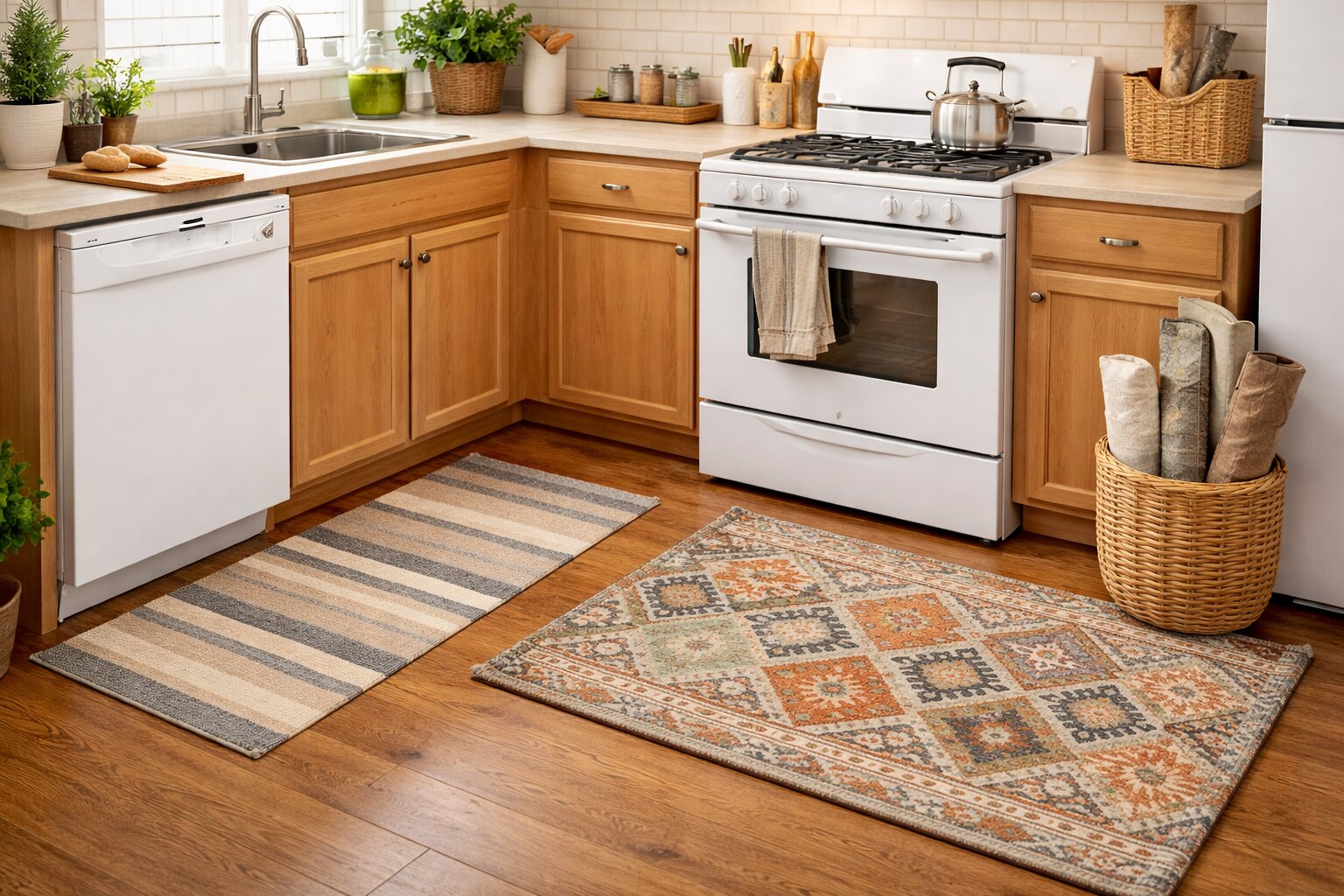
We’ve looked at a lot of kitchen rugs at Housenique, and the buying process always comes down to the same core criteria. Here’s our honest framework. For a full breakdown, check out our [kitchen rug buying guide: size, material and style].
Size and Placement: Measure Before You Buy
This is where most people go wrong. I’ve personally made the mistake of eyeballing a rug size and ending up with something that looked like a doormat in front of a full-size sink. Here’s what we recommend:
-
In front of the sink: A rug that extends 18–24 inches out from the cabinet base, wide enough to stand on comfortably (24–36 inches is typical). You want your whole stance covered, not just the tips of your toes.
-
In front of the stove: Similar dimensions. Enough to stand on while cooking without the edges drifting into walkways.
-
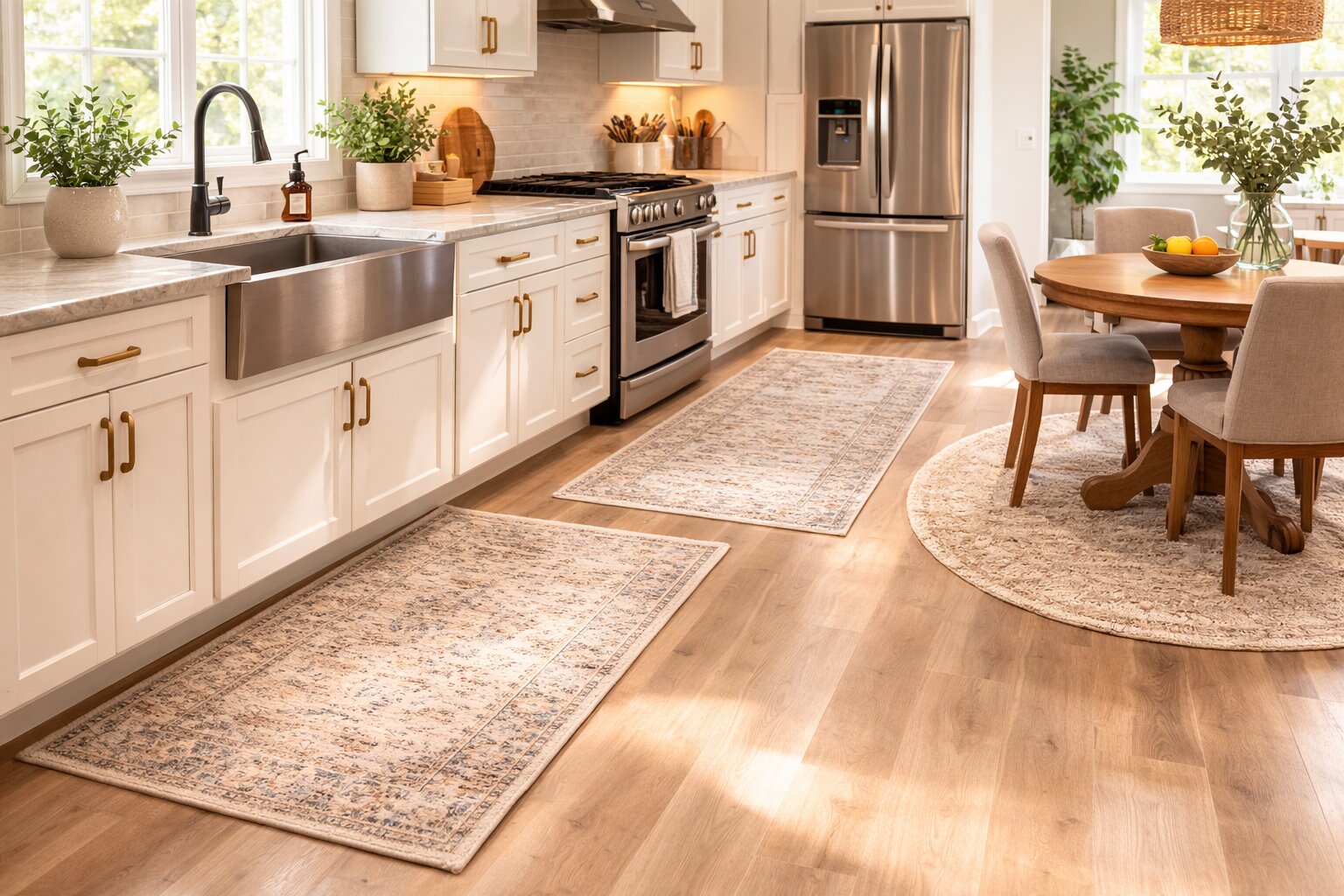
Galley or narrow kitchens: A runner is the obvious choice. Standard runner sizes run 2’×6′, 2’×8′, or 2.5’×8′. Runners visually guide movement and make narrow kitchens feel purposeful rather than cramped. Our full [kitchen runner rugs: how to use runners to define space] guide covers this layout in depth.
-
Kitchen table or breakfast nook: A round rug or small area rug (4’×6′) anchors the space nicely. We have specific recommendations in our [small kitchen and breakfast nook rug ideas] article.
Our practical tip: Lay down painter’s tape in the shape of the rug before you order. What looks proportionate on a product page can look very different on your actual floor.
For a complete sizing chart by kitchen type, don’t miss our dedicated [kitchen rug size and placement guide].
Material: What Actually Holds Up in a Kitchen
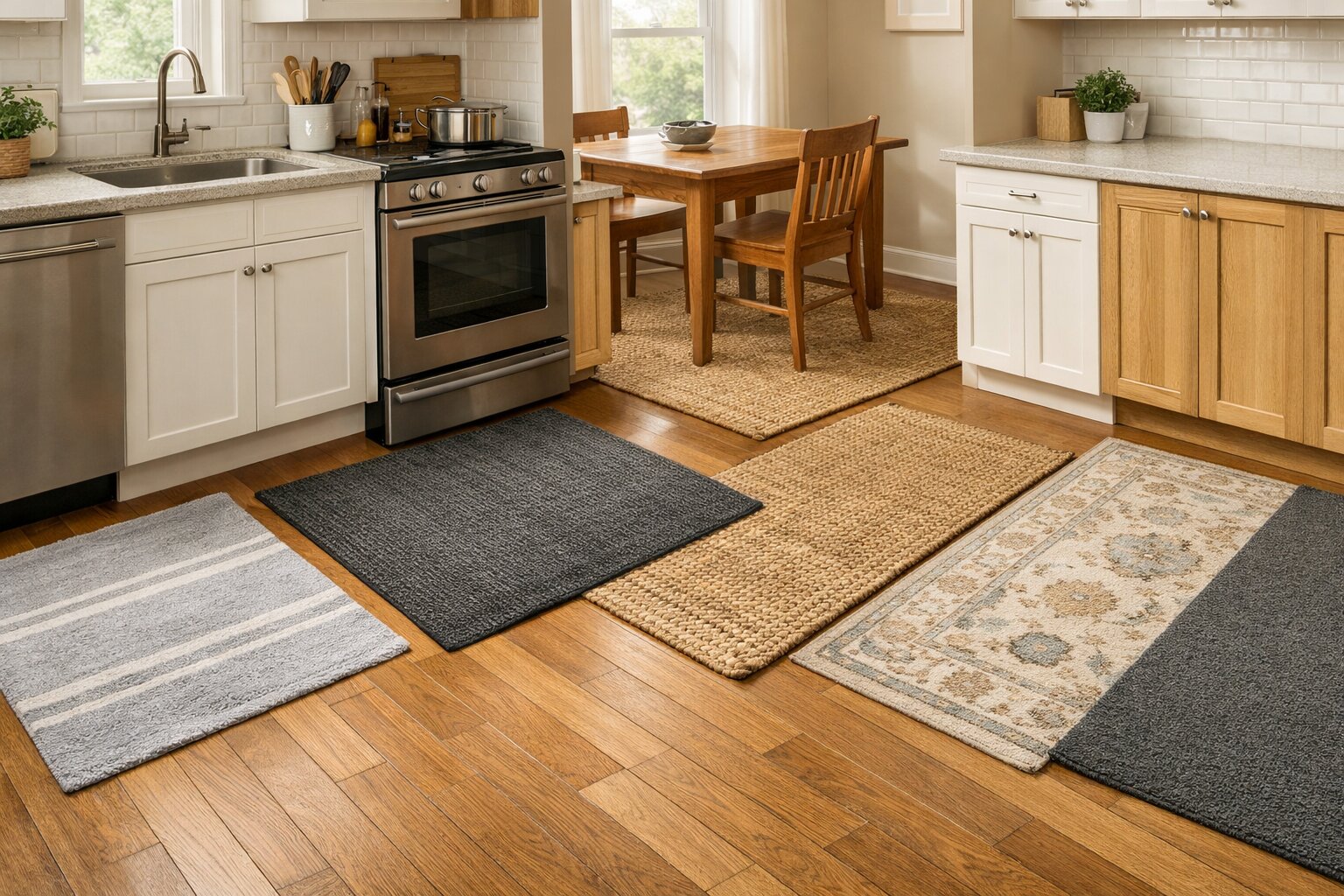
Material choice determines everything — how the rug feels, how it cleans, and how long it lasts. Here’s our honest breakdown of each option. We go much deeper in our [kitchen rug materials: cotton, jute, wool or synthetic] comparison.
Cotton: Our go-to recommendation for families. Cotton rugs are soft, affordable, and — most importantly — machine-washable. They handle repeated wash cycles well, come in a huge range of patterns and colors, and are gentle on bare feet. The trade-off is that they compress and wear faster than synthetic options. Great for high-use zones if you’re fine replacing them every few years.
Polypropylene (synthetic): If you want durability above all else, polypropylene is our pick. It’s stain-resistant, moisture-resistant, and often machine-washable. It holds its shape under heavy foot traffic far longer than cotton or natural fibers. The feel underfoot is less luxurious than cotton or wool, but for a kitchen, that’s usually an acceptable trade-off.
Jute and seagrass: We love the look of these — textured, organic, and instantly warm. But we’re honest with our readers: jute and seagrass are not ideal near sinks or stoves. Repeated moisture exposure can cause mold and discoloration. They’re better for dry kitchen zones or breakfast nooks. If you love this aesthetic, our [organic and natural fiber kitchen rugs: sustainable choices] guide has advice on placement and care.
Wool: A premium choice that ages beautifully. Wool fibers naturally repel light liquid spills and the material is remarkably resilient under foot traffic. The catch is that most wool rugs aren’t machine-washable, which makes them a tough sell for high-splash kitchen zones. They’re better suited to low-traffic areas or showcase kitchens.
Recycled and eco-certified synthetics: This is a fast-growing category we’re excited about. These rugs offer the practical performance of synthetic fibers with sustainability credentials — often made from recycled plastic bottles or certified eco-processes. We cover the best options in our roundup of [eco-friendly and washable rugs for busy families].
Slip Resistance: Our Non-Negotiable Requirement
If there’s one feature we’d never compromise on in a kitchen rug — especially in a family home — it’s non-slip performance. Wet floors near the sink and dishwasher are genuinely hazardous, and a rug that slides underfoot is worse than no rug at all.
Here’s what we look for:
-
Built-in rubber or latex backing: The most convenient option. Look for thick, textured rubber rather than thin spray-on backing, which tends to degrade and crumble after washing.
-
Separate rug pads: If you fall in love with a rug that doesn’t have non-slip backing built in, a quality rug pad is the answer. These also add cushioning, which helps with anti-fatigue comfort. We like dual-sided grip pads that work on both carpet and hard floors.
-
Low-pile or flat-weave construction: Thin rugs with less pile have fewer edge-curling issues — a surprisingly common tripping hazard in door openings and high-traffic paths.
We cover specific product types and what to watch out for in our [non-slip kitchen rugs: safety for kids and pets] guide.
Washability: The Feature We Won’t Compromise On
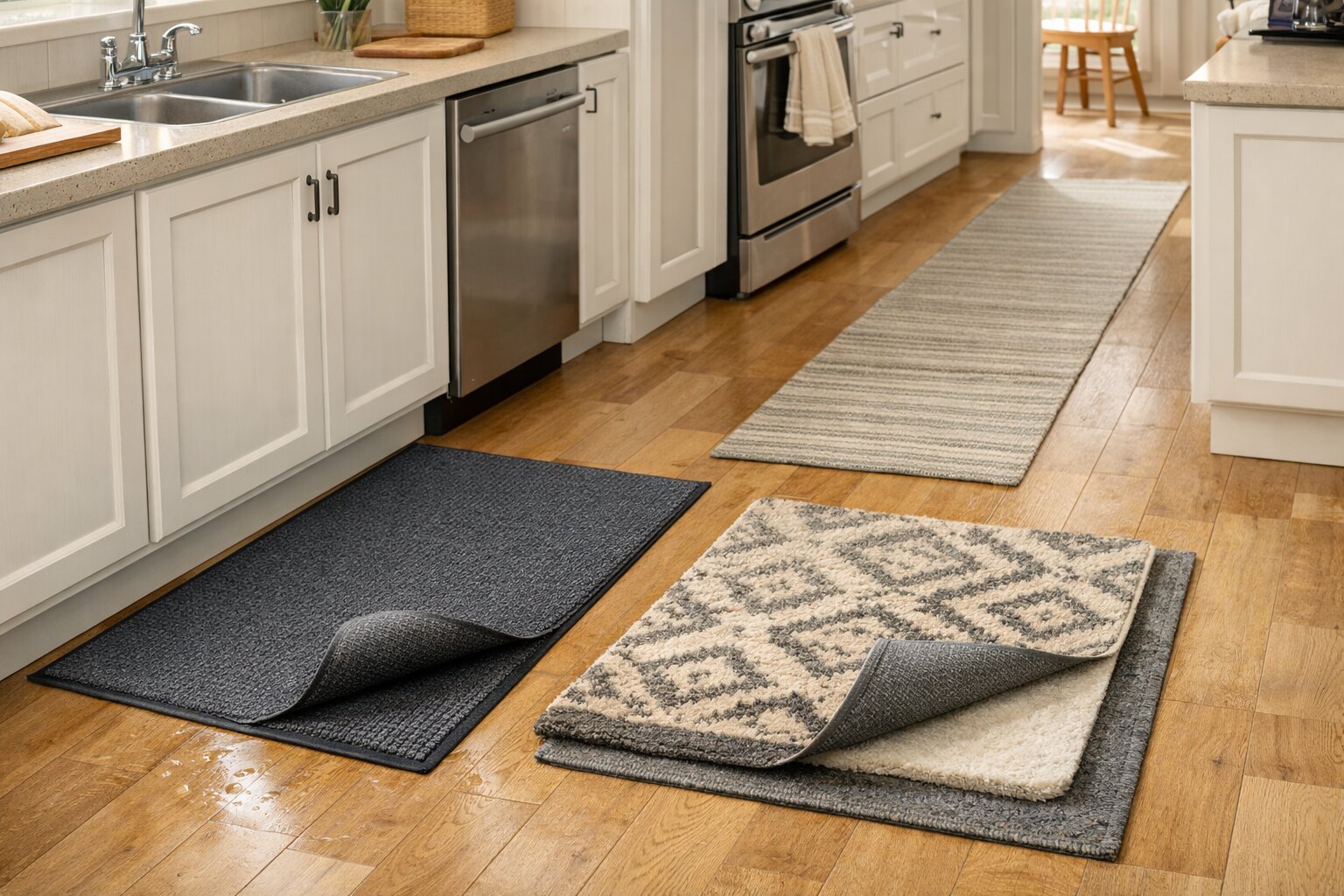
Let’s be honest: kitchens are messy. If your rug can’t go in the washing machine, it’s going to look terrible within a few months and you’ll either live with it or replace it. Neither is a good outcome.
Machine-washable rugs have become our standard recommendation for 95% of kitchen applications, especially in family homes. When evaluating washability, we check:
-
Can it fit in a standard home washer? Some larger rugs (3’×5′ and above) require a commercial machine. Check the care label dimensions before buying.
-
What temperature and cycle? Most kitchen rugs do best on cold, gentle cycles. Hot water can degrade rubber backing and cause colors to bleed.
-
Tumble dry or air dry? We prefer rugs that can tumble dry on low — faster and more convenient for frequent washing.
-
Color retention after multiple washes: Cheaper rugs fade quickly. Look for colorfast dyes, especially in darker shades.
We’ve reviewed the best washable options on the market in our guide to [machine-washable kitchen rugs: pros, cons and top brands]. And for step-by-step care advice, our [kitchen rug cleaning and care tips] article covers everything from weekly vacuuming to stain removal.
Kitchen Runner Rugs: Our Favorite Functional Upgrade
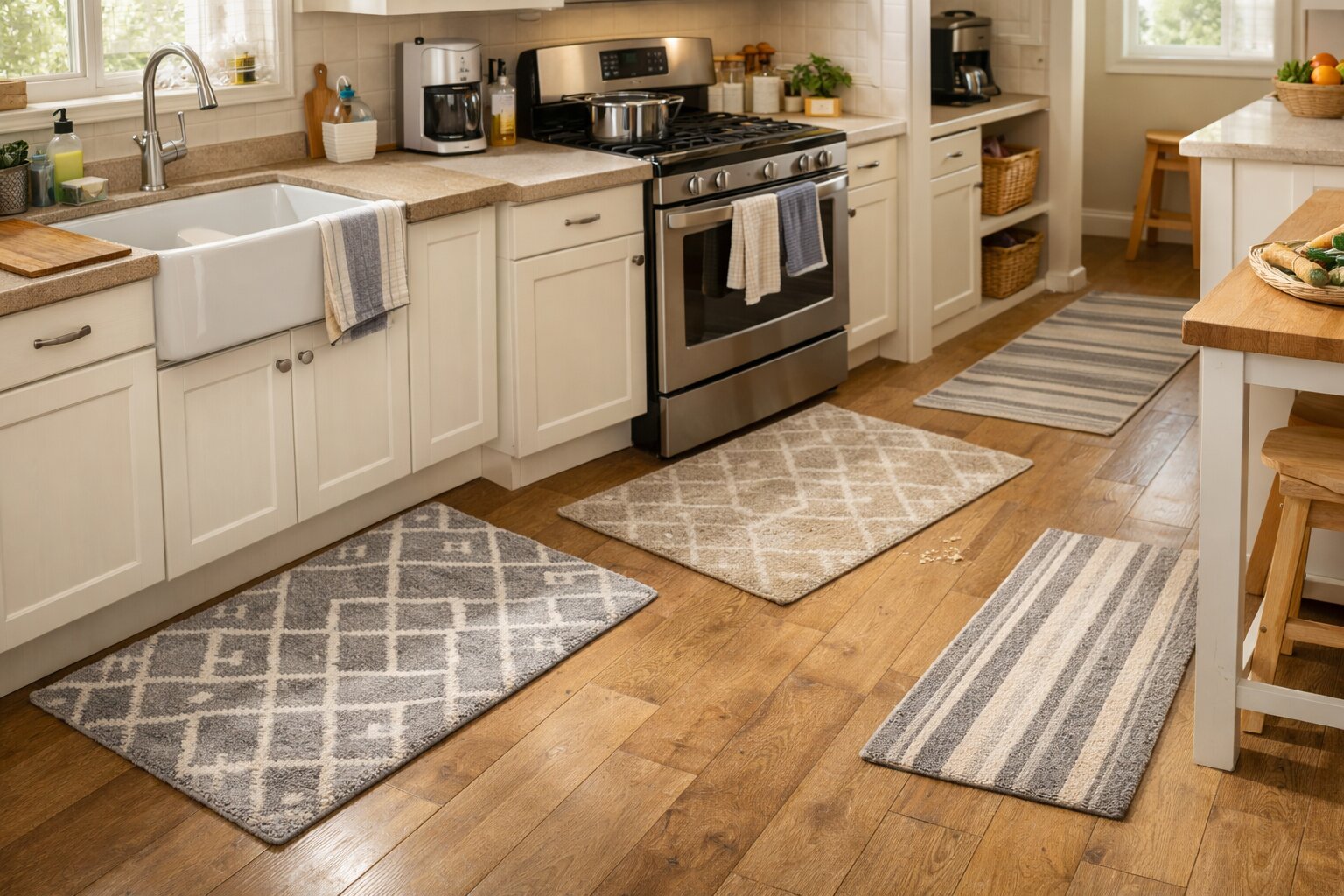
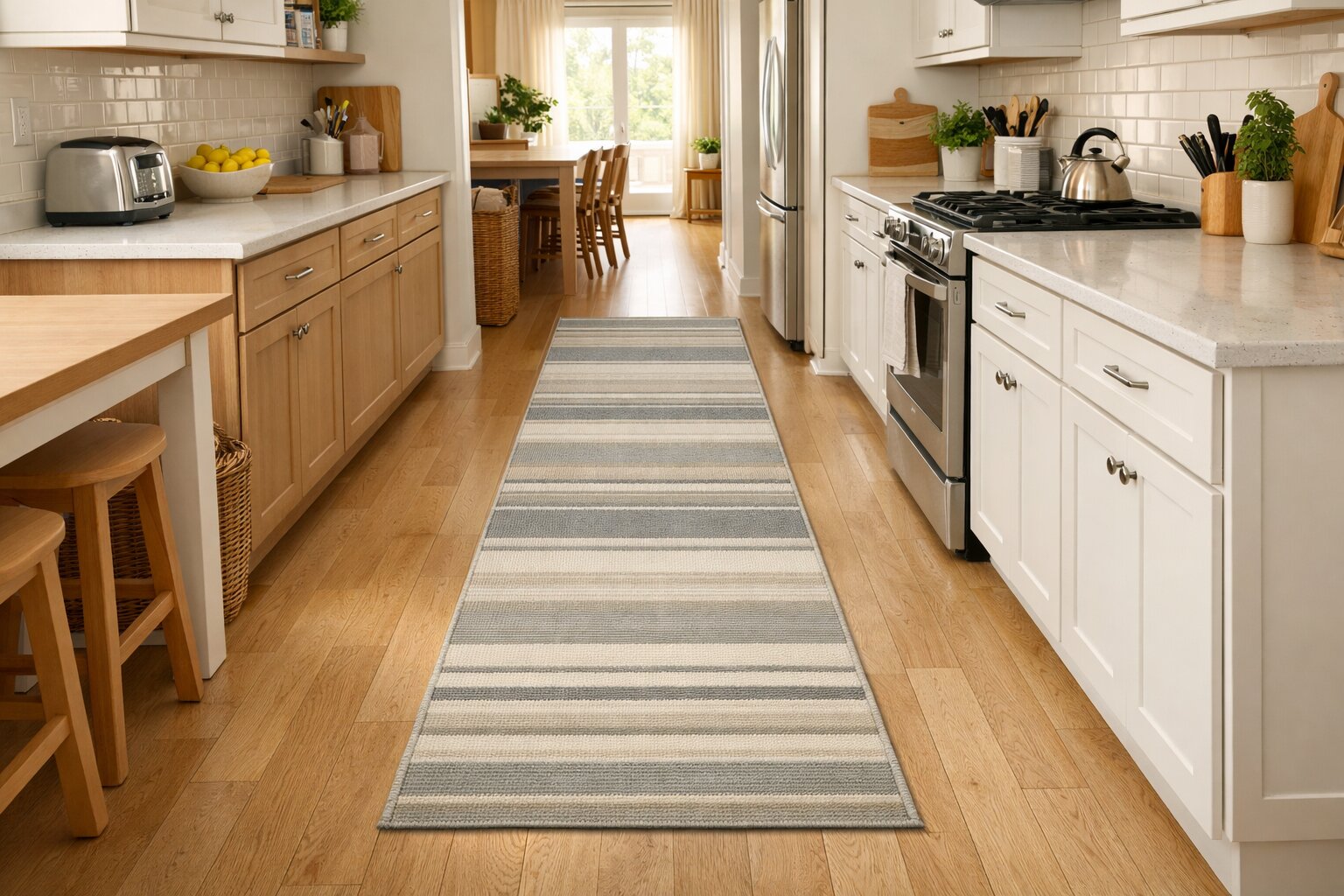
If your kitchen is narrow, galley-style, or has a long stretch of floor between the island and the cabinets, a runner rug is one of the best investments you can make. We recommend them constantly here at Housenique because they’re genuinely transformative in the right space.
What we look for in a kitchen runner:
-
Low-pile or flat-weave construction to minimize tripping at the ends
-
Width of 2–2.5 feet for most standard kitchens (wider runners suit open layouts)
-
Non-slip backing or a compatible rug pad underneath
-
A pattern or color that visually elongates the space — stripes running lengthwise are especially effective in narrow kitchens
For a full look at runner styling and sizing, visit our [kitchen runner rugs: how to use runners to define space] guide.
2026 Kitchen Rug Design Trends We’re Loving
The kitchen rug market has evolved significantly in recent years, and 2026 brings some genuinely exciting directions. Here’s what we’re recommending to Housenique readers right now. For our full trend breakdown, see [kitchen rug color trends 2026].
Texture-Maxxing
Dimensional surfaces — bouclé weaves, high-low pile, and tufted designs — are having a real moment. In kitchens, this means rugs with visual depth that add interest without relying on busy patterns. We love a subtle tufted cotton runner near the sink for this effect.
Jewel Tones and Saturated Colors
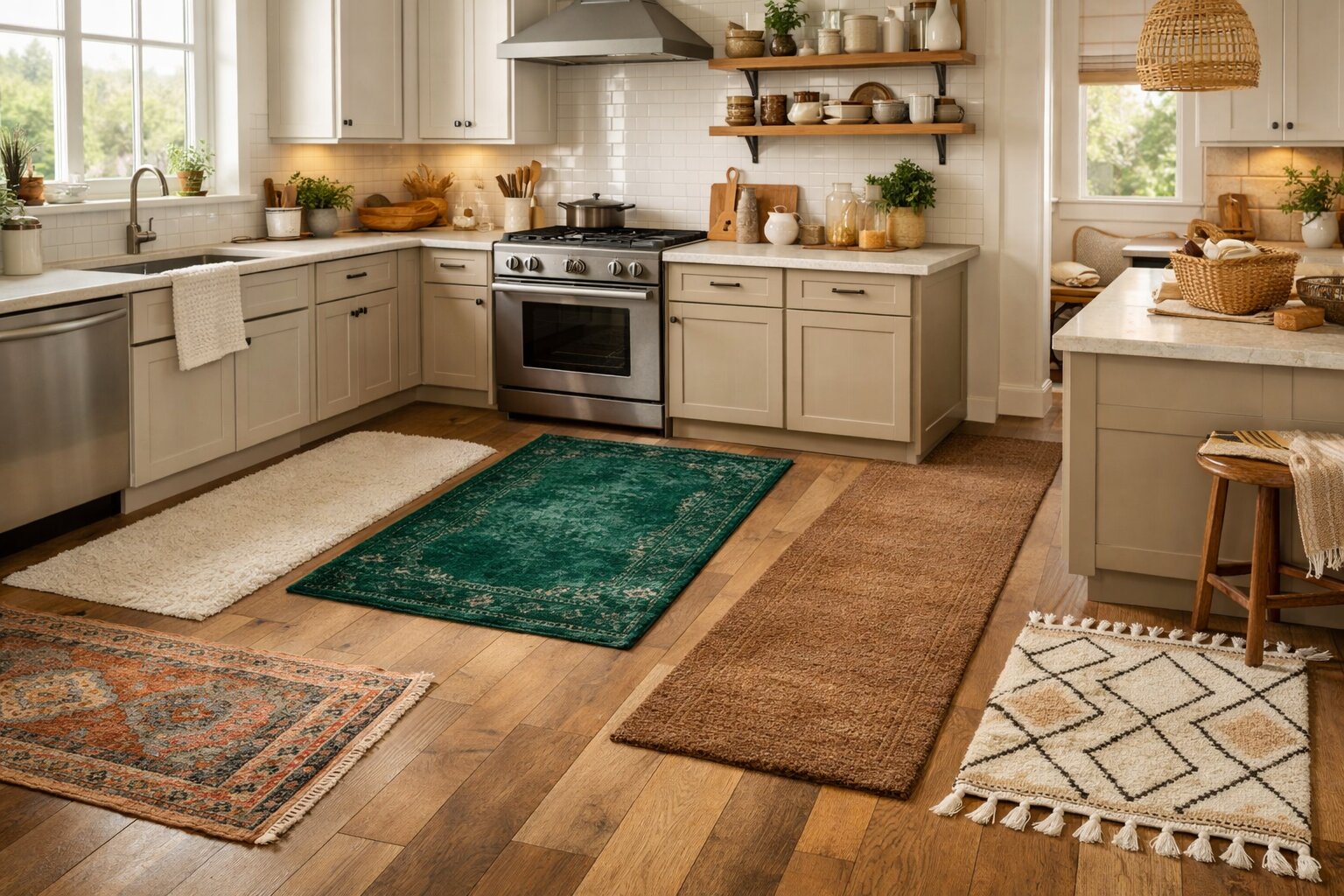
Emerald green, sapphire blue, and deep terracotta are the colors we’re seeing interior designers recommend for kitchens dominated by white or gray cabinetry. A jewel-toned rug near the stove or sink instantly transforms the room’s energy. Our [kitchen rug color trends 2026] article covers which shades work best by kitchen style.
Warm Neutrals
For readers who prefer a timeless backdrop, warm neutrals — camel, oat, sand, and chocolate brown — are replacing the cool grays that defined the last decade. These shades hide light dirt well and pair with almost any kitchen palette. We consider a warm neutral runner a safe, long-lasting investment.
Farmhouse and Boho Patterns
Tribal motifs, Persian medallions, and refined farmhouse checks remain perennial favorites in US kitchens. They add character without overwhelming a smaller space. Browse our full aesthetic guide in [farmhouse and boho kitchen rug styles].
Vintage and Moroccan-Inspired Rugs
One-of-a-kind vintage and Moroccan-style rugs are genuinely having a moment in kitchen design. Their handwoven textures and irregular dye patterns bring artisanal warmth to modern or transitional kitchens. See [vintage and Moroccan kitchen rugs: adding character] for what we’re recommending.
Safety Tips We Always Share with Family Readers
For households with young children or pets, safety planning should come before aesthetic planning. These are the practical precautions we always include in our buying advice:
-
Test rubber-backed rugs on hardwood first. Some rubber compounds react with floor finishes over time. We suggest placing a small pad or breathable rug pad between the rubber and your floor as a buffer.
-
Address curled edges immediately. A curled corner is a tripping hazard, full stop. Double-sided carpet tape or a well-fitted rug pad keeps edges flat.
-
Be thoughtful about stove placement. We recommend keeping thick or high-pile rugs out of the direct cooking zone. Sparks and grease splatter are rare but real hazards.
-
Choose low-pile for pet households. Pets’ claws can snag and unravel looped or high-pile constructions. Flat-weave rugs stand up much better to regular claw traffic.
Budget vs. Premium Kitchen Rugs: Our Honest Take
We get asked this constantly: “How much should I actually spend on a kitchen rug?” Our honest answer: it depends on how you’ll use it. For our full breakdown, read [budget vs premium kitchen rugs: when to splurge or save].
Where spending more pays off:
-
Material quality: A well-made polypropylene or tufted cotton rug will outlast three budget alternatives. Over time, it’s genuinely more economical.
-
Non-slip backing quality: Cheap rubber backings crumble and degrade within a year. Premium backings last significantly longer and perform better.
-
Dye quality: Higher-end rugs use colorfast dyes that don’t fade or bleed after multiple washes. For frequently laundered kitchen rugs, this matters a lot.
Where saving money is perfectly reasonable:
-
Trend-driven colors or seasonal patterns: If you’re updating your kitchen aesthetic and want a jewel-toned rug that matches your current refresh, a mid-range option is entirely adequate.
-
Secondary zone runners: A budget runner in a dry corner or low-traffic breakfast nook doesn’t need the same investment as your primary sink rug.
Our Kitchen Rug Maintenance Routine
Even the best rug underperforms without care. Here’s the maintenance schedule we share with Housenique readers — more detail is available in our [kitchen rug cleaning and care tips] guide.
Weekly: Shake out your rug outside or vacuum on a low-suction setting. For natural fiber rugs (jute, seagrass), use a soft brush or broom rather than a vacuum.
Every 2–4 weeks: Machine-wash washable rugs per the care label — usually cold water, gentle cycle. Air dry when possible. If using a dryer, low heat only.
Immediately for spills: Blot — never rub — liquid spills with a clean white cloth. For grease, apply baking soda, let it sit for 15 minutes, brush away, then treat with a diluted dish soap solution. Rinse and blot dry.
Every few months: Rotate your rug 180 degrees if it sits in a sunny spot. This evens out fading and wear. Also inspect your rug pad for degradation — old pads can leave marks on hardwood floors.
Our Final Checklist Before You Buy
Before you commit, we always recommend running through these questions:
-
✅ Did I measure the space — and leave at least 4 inches of clearance from cabinet edges?
-
✅ Is it machine-washable — and will it fit in my home washer?
-
✅ Does it have non-slip backing — or do I need a separate rug pad?
-
✅ Does the material suit my kitchen’s moisture and spill levels?
-
✅ Does the color/pattern work with my existing floors and cabinetry?
-
✅ Is it low-pile enough to avoid tripping hazards at doorways and high-traffic paths?
-
✅ Is the price point appropriate for the level of use I’m expecting?
Our Bottom Line
A kitchen rug isn’t just a decorative add-on — for most US families, it’s a daily-use essential that impacts comfort, safety, and how your kitchen actually feels to live in. After all the research and testing we do here at Housenique, we keep coming back to the same core advice: start with function, then layer in style.
Get the size right, choose a washable material that suits your lifestyle, and make sure it won’t slide. Once those boxes are checked, the fun part — colors, patterns, textures — opens right up. Whether you’re drawn to a refined farmhouse check, a jewel-toned runner, or a one-of-a-kind vintage Moroccan piece, there’s a kitchen rug that’s genuinely right for your home.
We hope this guide saves you time, money, and a few returns. If you have questions or want a specific recommendation for your kitchen layout, feel free to reach out — we love hearing from Housenique readers.
Happy decorating! 🏡
Explore Our Full Kitchen Rug Hub
We’ve written in-depth guides on every aspect of kitchen rug selection and styling. Browse the full series below:
-
👉 [Machine-washable kitchen rugs: pros, cons and top brands]
-
👉 [Non-slip kitchen rugs: safety for kids and pets]
-
👉 [Kitchen rug size and placement guide]
-
👉 [Kitchen rug materials: cotton, jute, wool or synthetic]
-
👉 [Anti-fatigue kitchen rugs vs mats: which is more comfortable]
-
👉 [Kitchen runner rugs: how to use runners to define space]
-
👉 [Farmhouse and boho kitchen rug styles]
-
👉 [Organic and natural fiber kitchen rugs: sustainable choices]
-
👉 [Vintage and Moroccan kitchen rugs: adding character]
-
👉 [Kitchen rug color trends 2026]
-
👉 [Budget vs premium kitchen rugs: when to splurge or save]
-
👉 [Eco-friendly and washable rugs for busy families]
-
👉 [Kitchen rug cleaning and care tips]
-
👉 [Small kitchen and breakfast nook rug ideas]
